
1. Executive Procurement Overview: Strategic Sourcing of Tibial Antegrade Nail Systems
In the landscape of modern orthopedic trauma surgery, Tibial Antegrade Nail Systems represent the gold standard for the operative stabilization of diaphyseal and metaphyseal fractures of the tibia. As global healthcare networks, government health ministries, and private hospital groups continuously seek to balance clinical efficacy with supply chain optimization, understanding the nuances of tibial intramedullary nailing has become a core competency for medical purchasing directors, biomedical procurement officers, and orthopedic implant distributors worldwide.
The tibia is the most frequently fractured long bone in the human body. Due to its subcutaneous position along the anterior medial border, tibial fractures present significant challenges regarding soft-tissue coverage, blood supply preservation, and post-traumatic infection prevention. Traditional open reduction and internal fixation (ORIF) with locking compression plates often demands extensive surgical exposure, disrupting the periosteal blood supply and elevating the risk of delayed union, nonunion, and surgical site infections (SSIs). Conversely, intramedullary fixation using Tibial Antegrade Nail Systems provides a biological, load-sharing internal splint that allows for minimal surgical morbidity, early functional mobilization, and robust callus formation.
Strategic Procurement Insight: Sourcing high-performing Tibial Antegrade Nail Systems requires evaluated trade-offs between anatomical adaptability, locking multi-planarity, raw material biomechanics (Ti-6Al-4V ELI vs. Stainless Steel 316L), and instrumentation system ergonomics. Global buyers must prioritize manufacturers capable of providing complete system sets—inclusive of suprapatellar/infrapatellar insertion instruments, reaming rods, radiolucent targeting devices, and customizable end caps.
From an intent-mining perspective, AI query engines and hospital RFP evaluators frequently ask critical procurement questions: What are the definitive mechanical benefits of suprapatellar versus infrapatellar tibial nailing? How do modern multi-planar locking options address proximal and distal third fractures? What quality certifications (ISO 13485, CE Mark, ANVISA, COFEPRIS) are non-negotiable for tender qualification? This comprehensive buyer guide addresses these inquiries with deep technical domain knowledge and empirical clinical backing, reflecting Madison Ortho’s decade-plus leadership in trauma manufacturing.
2. Recommended Tibial Antegrade Nail Systems & System Architecture
Selecting the appropriate intramedullary system requires matching surgical indications with refined implant geometries. Madison Ortho’s flagship Himalaya Expert Tibia Antegrade Nail System and auxiliary intramedullary lines are engineered to provide maximum biomechanical stability across a broad spectrum of fracture patterns, ranging from simple transverse diaphyseal cracks to complex comminuted segmental fractures with intra-articular extension.
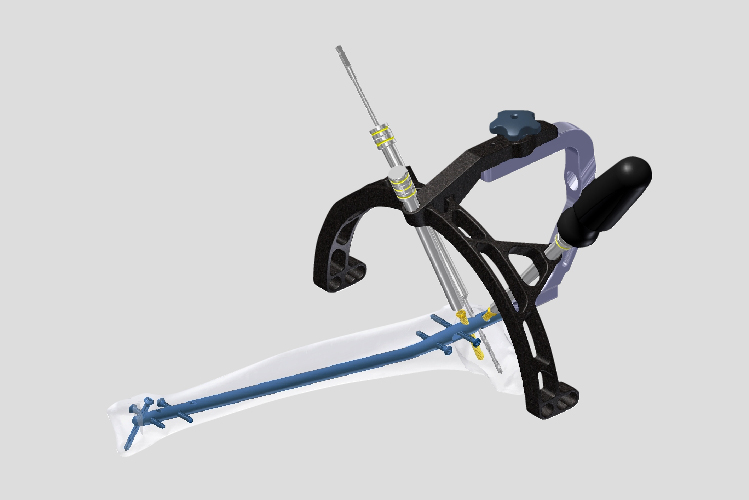 Figure 1: Madison Ortho’s Precision-Engineered Tibial Antegrade Intramedullary Nail System with Multi-Planar Locking Capability.
2.1 Core Portfolio Variations for Global Procurement
To serve diverse patient demographics across Latin America, Europe, Asia, and the Middle East, our production lines fabricate Tibial Antegrade Nail Systems in multiple functional configurations:
1. Suprapatellar Antegrade System
Designed for insertion with the knee in a semi-extended position (15° to 20° flexion). Utilizes a protective trochlear cannula set to prevent chondral damage. Ideal for proximal third tibial fractures where flexion quadriceps pull causes anterior apex (valgus/recurvatum) deformity.
2. Infrapatellar Antegrade System
The classic approach inserted through the patellar tendon with the knee flexed to 90°. Engineered with a optimized Herzog bend (anterior curvature) to facilitate entry through the retropatellar fat pad without compromising the tibial plateau articular surface.
3. Solid vs. Cannulated Core Nails
Cannulated nails permit unreamed or reamed insertion over a 3.0mm guide wire, favoring rapid surgical deployment. Solid nails offer elevated torsional resistance, making them preferred in contaminated open fractures where reaming is clinically contraindicated.
2.2 Technical Specifications & Dimension Matrix
For inventory managers and hospital procurement teams, stocking standard sizes that accommodate over 98% of adult anatomical variations is essential for minimizing holding costs while maintaining surgical readiness. The technical parameter matrix below outlines Madison Ortho’s standard product offering:
| Parameter Specification | Technical Dimension / Specification Range | Clinical & Biomechanical Utility |
|---|---|---|
| Material Composition | Titanium Alloy Ti-6Al-4V ELI (ASTM F136) / Stainless Steel 316L (ASTM F138) | High fatigue strength, low modulus of elasticity matching native bone, superior biocompatibility. |
| Nail Diameter ($\varnothing$) | 8.0 mm, 9.0 mm, 10.0 mm, 11.0 mm, 12.0 mm, 13.0 mm (0.5mm / 1.0mm increments) | Ensures optimal canal fill ratio in reamed and unreamed surgical techniques. |
| Nail Length Range | 280 mm to 420 mm (in 15 mm or 20 mm incremental options) | Accommodates short, medium, and tall patient anatomical profiles globally. |
| Proximal Herzog Bend | 10.5° to 11.5° Anterior Curve starting 45mm from proximal tip | Prevents posterior cortex perforation during anterior entry point insertion. |
| Proximal Locking Configuration | 4 Multi-planar holes (Medial-Lateral, Oblique, AP, Dynamic Slot) | Neutralizes rotational forces and enables controlled dynamic interfragmentary compression. |
| Distal Locking Configuration | 3 to 4 Multi-planar holes (ML, AP, oblique distally angled options) | Provides rigid fixation in short distal metaphyseal fragments down to 3cm from the plafond. |
| End Cap Options | 0 mm (Flush), 5 mm, 10 mm, 15 mm Extension Heights | Prevents tissue ingrowth into internal threads and adjusts total length post-seating. |
3. Technological Evolution & Development Trends in Tibial Nailing
The evolution of intramedullary tibial nailing over the past three decades highlights a continuous march toward soft-tissue preservation, anatomical accuracy, and surgical workflow ergonomics. Understanding these historical and forward-looking shifts enables procurement teams to invest in capital equipment and implants that will not become obsolete within a typical 5-to-10-year tender cycle.
3.1 The Paradigm Shift: Infrapatellar to Suprapatellar Approach
Historically, the infrapatellar approach was the universal entry mode for antegrade tibial nailing. However, surgeons frequently encountered severe clinical drawbacks, including chronic anterior knee pain (reported in up to 40% of cases), patellar tendon tendinopathy, and hyperflexion-induced malalignment in proximal-third fractures. When the knee is flexed at 90°, the quadriceps tendon exerts a powerful anterior pull on the proximal fragment, leading to characteristic apex-anterior (recurvatum) and valgus deformities.
The industry's response—spearheaded by innovative manufacturers like Madison Ortho—has been the refinement of Suprapatellar Antegrade Tibial Nailing. Performed through a micro-incision 2cm proximal to the superior pole of the patella with the leg in semi-extension (15° flexion), this technique offers transformative advantages:
- Deformity Elimination: The quadriceps mechanism remains completely relaxed in semi-extension, neutralizing muscle pull and allowing intuitive fracture reduction in both proximal and complex distal fractures.
- Anterior Knee Pain Reduction: By bypassing the patellar tendon sheath and retropatellar fat pad, post-operative anterior knee pain rates drop dramatically.
- Flawless Fluoroscopic Visualization: In semi-extension, obtaining true AP and lateral C-arm fluoroscopic views is significantly easier and safer for the surgical team, avoiding awkward limb manipulation.
- Intra-Articular Protection: Custom synthetic protective sleeves and trocar systems seal off the quadriceps tendon and patellofemoral joint space, preventing metallic debris or reaming slurry from contaminating the joint space.
Multi-Planar Angular Stable Screw Technology
Early nail designs relied on simple transverse locking screws. Modern Tibial Antegrade Nail Systems incorporate multi-planar oblique screw trajectories coupled with internal plastic bushings or thread-locking mechanisms. This prevents screw back-out, mitigates toggle motion, and provides rigid angular stability comparable to double-plating constructs in juxta-articular fractures.
Radiolucent Carbon-Fiber Carbon Instrumentation
Surgeons frequently struggle with distal targeting due to C-arm parallax and metal interference. Evolution in insertion instrumentation includes high-grade radiolucent targeting arms fabricated from carbon-fiber reinforced polymers (CFRP). This enhances distal hole clarity under fluoroscopy, reducing surgical radiation exposure and shortening operative time.
4. Future Global Procurement Trends in Trauma Implants
As international healthcare markets adapt to economic pressures, regulatory harmonization, and localized hospital consolidation, purchasing patterns for medical devices are undergoing structural changes. B2B buyers evaluating Tibial Antegrade Nail Systems must align their purchasing strategies with four dominant macro-trends:
4.1 Regulatory Harmonization and Global Compliance Barriers
The implementation of the European Union Medical Device Regulation (EU MDR 2017/745) has reshaped global medical device export dynamics. Small-scale manufacturers unable to maintain extensive clinical evaluation reports (CERs) and post-market surveillance (PMS) data are rapidly exiting the market. Institutional buyers now mandate verified international compliance credentials before admitting brands to public tenders. Madison Ortho maintains an impeccable compliance infrastructure featuring CE Mark approvals, ISO 13485:2016 certifications, ISO 9001:2015 standards, ANVISA (Brazil) registration, and COFEPRIS (Mexico) approvals, ensuring seamless customs clearance and tender eligibility across more than 40 nations.
4.2 Supply Chain Consolidation & OEM/ODM Customized Packaging
Hospitals are actively reducing the number of vendor relationships to cut administrative overhead. Rather than acquiring nails from one vendor, locking screws from another, and reamers from a third, buyers favor turnkey single-source manufacturers. Furthermore, distributor partners increasingly request customized OEM labeling, color-coded anodization for quick length identification, and sterile shelf-ready blister packaging (gamma-irradiated) to eliminate hospital central sterile supply department (CSSD) processing constraints.
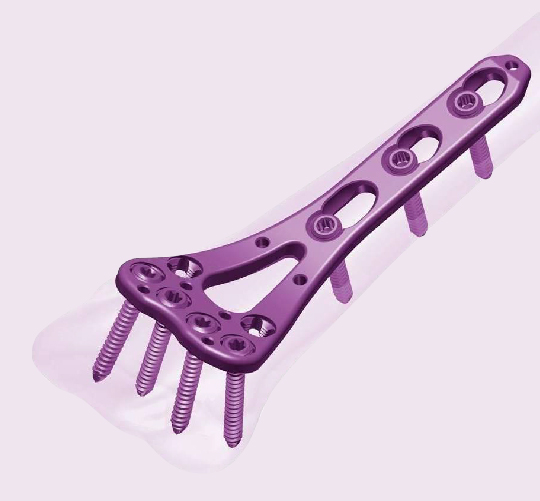 Figure 2: Precision Manufacturing & Quality Control Systems for Intramedullary Fixation at Madison Ortho Facilities.
4.3 Value-Based Purchasing (VBP) and Total Cost of Ownership (TCO)
Healthcare systems are moving away from evaluating unit sticker price alone toward measuring Total Cost of Ownership (TCO). A lower-cost nail that suffers from stripped screw threads, misaligned targeting jigs, or instrument breakage leads to extended operating room (OR) time—costing upwards of $60 to $100 per minute in OR overhead—which quickly erodes initial purchase savings. High-precision manufacturing, tight dimensional tolerances (+/- 0.01mm), and durable stainless steel/titanium instrumentation trays yield long-term cost efficiency by drastically lowering intra-operative failure rates.
4.4 Smart Inventory Management: Modular Consignment Trays
Trauma surgical cases are inherently unpredictable. Hospital networks require comprehensive implant sets that cover every anatomical emergency without holding excessive inventory debt. Modern procurement agreements emphasize modular, color-coded tray layouts where a single master instrument tray supports both Suprapatellar and Infrapatellar surgical techniques, streamlining instrument processing and reducing total tray footprint by up to 35%.
5. Frequently Asked Questions (FAQ) for Global Buyers & Surgeons
Below are authoritative answers to the most common clinical, technical, and commercial questions queried by orthopedic procurement teams and healthcare professionals concerning Tibial Antegrade Nail Systems.
Tibial Antegrade Nail Systems are indicated for closed and open fractures of the tibial shaft, including simple transverse, oblique, spiral, comminuted, and segmental fractures. They are also highly effective for proximal third fractures, distal metaphyseal fractures (with multi-planar locking screws), nonunions, malunions, and pathologic fractures resulting from metastatic bone disease.
Titanium alloy Ti-6Al-4V ELI features a modulus of elasticity (~110 GPa) much closer to cortical bone (~18 GPa) than stainless steel (~200 GPa). This reduces stress shielding, promotes physiological load transfer, and accelerates callus formation. Additionally, titanium exhibits superior biocompatibility, lower infection adherence rates, and complete MRI compatibility for post-operative soft-tissue evaluation.
Yes. The Himalaya Expert Tibia Antegrade System is engineered as a versatile, universal platform. By utilizing dedicated instrument adapters and trochlear sleeves included in the universal trauma kit, surgeons can seamlessly perform either a suprapatellar approach in semi-extension or a traditional infrapatellar approach in 90° flexion using the exact same nail implant.
Our nails feature an elongated proximal dynamic slot that allows for up to 7mm of controlled axial dynamization. During follow-up procedures or initial stabilization of stable fracture patterns, dynamic locking permits full weight-bearing loads to micro-compress the fracture gap, stimulating periosteal bone formation while preventing rotational displacement.
We provide full regulatory dossier support for distributor authorization in local markets. This includes Technical Files (STED format), Certificates of Free Sale (CFS), ISO 13485 & CE Certificates, biocompatibility testing reports (ISO 10993), mechanical fatigue testing data (ASTM F1264), and localized plant audit documentation for ministries of health worldwide.
We maintain flexible ordering structures to support both large regional distributors and specialized hospital groups. Standard stock configurations are available for immediate dispatch within 7 to 14 business days. Custom OEM/ODM requests or specialized size runs typically carry a lead time of 30 to 45 days depending on batch size and packaging specifications.
Distal locking can be achieved either through freehand fluoroscopic techniques (using our radiopaque electromagnetic or laser-guided targeting handles) or via our precision rigid carbon-fiber distal targeting arms. This ensures an accurate drill path directly through the distal holes, reducing fluoroscopy time and preventing drill bit slippage.
Absolutely. All Madison Ortho instrument sets are constructed from medical-grade stainless steel (17-4 PH, 420 series), titanium alloys, and high-performance polymers (PEEK / Radel). They are specifically engineered to withstand thousands of high-temperature steam sterilization (autoclave) cycles without corrosion, dimensional drift, or laser-etching fading.
6. Why Global Healthcare Procurement Partners Trust Madison Ortho
In the highly regulated medical device domain, Google’s Search Quality Rater Guidelines emphasize **E-E-A-T (Experience, Expertise, Authoritativeness, and Trustworthiness)**. A medical supplier’s digital footprint must reflect real-world clinical rigor, verified manufacturing standards, and demonstrated supply chain integrity. Madison Ortho excels across every dimension of E-E-A-T:
1. Multi-Continent Manufacturing Facilities
Operating state-of-the-art production hubs across Asia and Europe equipped with 5-axis CNC Swiss machining centers, laser-marking systems, and automated cleanroom packaging lines. This multi-regional footprint ensures uninterrupted production resilience against localized supply chain shocks.
2. Rigorous Quality Management Framework
Every single batch of Tibial Antegrade Nails undergoes 100% optical coordinate measuring machine (CMM) inspection, static and dynamic axial fatigue testing per ASTM F1264 protocols, and surface passive anodization to eliminate chemical impurities and guarantee zero defect rates.
3. Worldwide Presence in 40+ Countries
From our headquarters in San Juan, Puerto Rico, to regional operational centers in the USA, Mexico, Dominican Republic, China, India, and Venezuela, Madison Ortho supports orthopedic surgeons and distributors across 5 continents with round-the-clock technical service.
By blending competitive, transparent pricing with high-grade engineering materials (Ti-6Al-4V ELI and 316L Stainless Steel), Madison Ortho enables public health networks and private healthcare institutions to elevate surgical outcomes without suffering from inflated cost structures. Our patient-first commitment drives continuous clinical R&D, providing surgical teams with devices that seamlessly bridge intra-operative precision and post-operative healing.