
In contemporary orthopedic surgery, the selection and global sourcing of Joint Replacement Prostheses represent a high-stakes decision for clinical directors, hospital procurement committees, and surgical device distributors. As total joint arthroplasty (TJA) volume expands globally due to aging demographics and active lifestyle retention, healthcare systems require arthroplasty implants that harmonize uncompromised bio-tribological longevity, anatomic surgical versatility, and cost-efficient supply chain scalability.
Madison Ortho, headquartered in San Juan, Puerto Rico, with state-of-the-art manufacturing infrastructure spanning Europe and Asia, stands as a premier global OEM manufacturer and supplier of precision total joint replacement solutions. Built upon a rigorous patient-first engineering philosophy, our joint replacement portfolio—spanning total hip replacement (THR), total knee replacement (TKR), and shoulder reconstruction prostheses—provides surgeons with clinical predictable mechanics while solving complex procurement challenges for health authorities worldwide.
Clinical Information Gain: The Bio-Tribology Paradigm Shift
Unlike traditional joint replacement prostheses reliant on standard ultra-high-molecular-weight polyethylene (UHMWPE), modern arthroplasty demands advanced materials engineered to eliminate osteolysis caused by sub-micron wear debris. Madison Ortho integrates Highly Cross-Linked Polyethylene (HXLPE) enriched with Vitamin E (α-tocopherol) paired with plasma-sprayed porous Titanium (Ti-6Al-4V ELI) and Hydroxyapatite (HA) dual-layer coatings. This technical synergy increases fatigue strength, reduces volumetric wear by up to 87% in simulator testing, and fosters accelerated, long-term biological fixation (osseointegration).
Clinical Product Recommendations: Precision Arthroplasty Implant Systems
Global procurement teams must evaluate joint prostheses based on primary fixation mechanics, modularity options, revision adaptability, and surgical instrumentation ergonomics. Below is an in-depth breakdown of Madison Ortho’s flagship joint replacement product lines recommended for hospital enterprise tenders and distribution contracts.
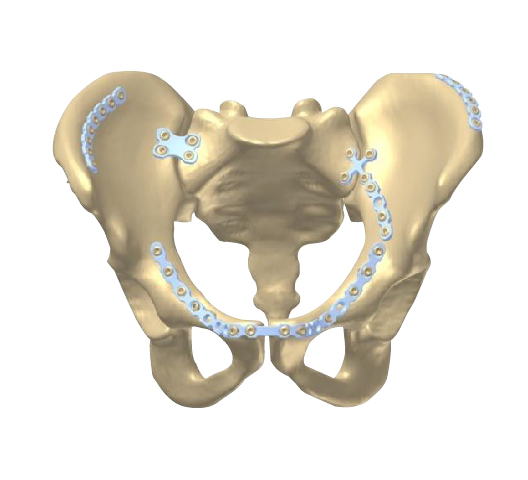
Total Hip Arthroplasty (THA) System
Features cementless tapered wedge femoral stems with proximal micro-grooves and dual HA/Titanium porous coating. Accommodates 28mm, 32mm, and 36mm CoCrMo or Delta Ceramic heads paired with press-fit acetabular cups for optimal offset and hip stability.
Total Knee Arthroplasty (TKA) System
Anatomically contoured CoCrMo femoral components designed for deep flexion (up to 155°). Features Posterior Stabilized (PS) and Cruciate Retaining (CR) modular Vitamin E HXLPE tibial inserts with mirror-polished CoCrMo or Titanium alloy tibial trays.

Modular Shoulder Reconstruction System
Comprehensive shoulder prosthesis platform convertible between Anatomical Total Shoulder Arthroplasty (TSA) and Reverse Shoulder Arthroplasty (RSA). Features variable inclination humeral stems and porous glenoid baseplates for complex trauma and rotator cuff tear arthropathy.
Technical Material Specifications & Bio-Tribological Benchmarks
To provide high information gain for biomedical engineering evaluators, the following matrix outlines the metallurgical and tribological standards applied across Madison Ortho's joint replacement prostheses range:
| Implant Sub-Component | Substrate Material Standard | Surface Treatment / Coating | Biomechanical Objective |
|---|---|---|---|
| Femoral Stem (THA) | Ti-6Al-4V ELI (ISO 5832-3 / ASTM F136) | Vacuum Plasma Sprayed (VPS) Ti + Hydroxyapatite (HA) | Eliminates stress shielding; accelerates primary biological osseointegration. |
| Femoral Head | CoCrMo Alloy (ISO 5832-4) / BIOLOX® delta Ceramic | Super-polished mirror finish (Ra < 0.01 µm) | Minimizes surface friction and wear particle release against poly liners. |
| Acetabular Cup Shell | Forged Titanium (Ti-6Al-4V) | Porous Titanium micro-structure with 45–60% porosity | Optimizes bone ingrowth with immediate rotational stability. |
| Femoral Condyle (TKA) | Cast CoCrMo Alloy (ASTM F75) | High-gloss polished articular surfaces | Maintains consistent patellofemoral tracking during deep flexion. |
| Tibial Insert (TKA) | Vitamin E Cross-Linked Polyethylene (HXLPE) | Gamma irradiated in inert gas environment | Prevents oxidation-induced embrittlement; ultra-low linear wear rate. |
Future Procurement Trends in Global Arthroplasty Markets (2026–2035)
The global joint replacement market is transitioning rapidly under macroeconomic pressure, regulatory evolutions, and technological disruption. For purchasing managers and healthcare executives, navigating joint prosthesis procurement requires anticipating five core market trajectories over the next decade:
1. Transition to Value-Based Procurement (VBP) and Tendering Models
Global health authorities in Europe, Latin America, Asia, and the Middle East are abandoning pure low-bid procurement models. Instead, tender evaluation matrices prioritize Total Cost of Care (TCC). Implants that demonstrate lower revision rates, reduced surgical operating room (OR) times through ergonomic trial instrumentation, and zero packaging-defect rates capture multi-year institutional contracts. Madison Ortho supports this shift by providing comprehensive clinical dossier evidence, low historical revision metrics, and aggressive OEM pricing models that lower hospital capital expenditure without compromising device quality.
2. Dual-Sourcing Strategies and Regionalized Supply Chain Resilience
Geopolitical friction, post-pandemic logistics bottlenecks, and strict export-import controls have exposed vulnerabilities in centralized medical device manufacturing. Healthcare networks now mandate dual-sourcing strategies. Procurement directors prefer manufacturers with global multi-hub operations. Madison Ortho addresses this vulnerability with strategic operational bases in Puerto Rico (USA jurisdiction), the United States, Europe, China, India, Mexico, the Dominican Republic, and Venezuela—ensuring seamless regional delivery, zero stock-outs, and local regulatory clearance capabilities.
3. Convergence of Standard Implants with Patient-Specific Instruments (PSI)
While fully 3D-printed custom prostheses serve hyper-complex revision cases, mass-market joint replacement relies heavily on standard implant geometries augmented by Patient-Specific Instruments (PSI) and pre-operative 3D surgical planning. By utilizing pre-op CT or MRI scans, surgical teams can select exact implant sizes, offset options, and bone resection cuts prior to entering the OR, significantly lowering instrument tray burden and sterilization turnover costs for purchasing departments.
4. Strict Regulatory Harmonization (EU MDR, ANVISA, COFEPRIS)
Regulatory barriers for joint replacement prostheses are escalating worldwide. The implementation of the European Union Medical Device Regulation (EU MDR 2017/745) and stringent post-market clinical follow-up (PMCF) mandates have forced legacy vendors to discontinue underperforming SKUs. Procurement entities must verify that suppliers possess robust quality systems certified under ISO 13485:2016 and hold valid CE Marks, COFEPRIS clearances (Mexico), ANVISA certifications (Brazil), and SGS quality audits. Madison Ortho maintains continuous regulatory compliance, giving global buyers full registration confidence.
5. Robotic-Assisted Surgery (RAS) Compatibility
Robotic surgical platforms for TKA and THA require joint replacement prostheses with high geometric tolerance and precision CAD-mapped tracking markers. Madison Ortho's engineering team ensures that implant geometries are fully documented and compatible with open-architecture robotic navigation and alignment software, positioning our product line at the center of modern digital surgical suites.
Technological Breakthroughs & Product Development Trends
Innovation in joint replacement prostheses focuses on overcoming the historical failure modes of primary arthroplasty: aseptic loosening, periprosthetic joint infection (PJI), dislocation, and polyethylene fatigue failure.
Bioactive Porous Metallurgy and Additive 3D Printing
Conventional plasma coating applied to solid titanium stems is increasingly supplemented by Electron Beam Melting (EBM) and Selective Laser Melting (SLM) additive manufacturing. These techniques create integral porous trabecular titanium structures that mimic human cancellous bone modulus of elasticity (reducing stress shielding). These micro-porous architectures possess average pore sizes between 300 to 500 microns with 65–75% interconnected porosity, encouraging rapid capillary osteon migration and direct mechanical interlock.
Engineering Insight: Mitigating Periprosthetic Joint Infection (PJI)
PJI remains one of the most devastating complications in total joint replacement, costing healthcare systems tens of thousands of dollars per revision case. Advanced development in Madison Ortho’s R&D pipeline focuses on nanostructured anti-adhesive surface topographies and silver-ion/copper-doped hydroxyapatite coatings. These surface modifications inhibit bacterial biofilm formation (such as Staphylococcus aureus and Staphylococcus epidermidis) without relying on local antibiotics, dramatically improving infection resistance in high-risk patient populations.
Next-Generation Tribology: Vitamin E Stabilized Polyethylene
First-generation UHMWPE suffered from free-radical oxidation caused by radiation sterilization in air, leading to delamination and massive wear debris. Second-generation HXLPE reduced wear but suffered from reduced fatigue strength due to post-irradiation remelting. The current gold standard—embodied in Madison Ortho’s joint solutions—utilizes Vitamin E blended polymer resins. Blending α-tocopherol directly into the matrix neutralizes free radicals continuously without requiring thermal remelting, preserving full mechanical fatigue strength while achieving ultra-low wear performance over decades of joint articulation.
Comprehensive Arthroplasty Procurement FAQ: Answers to Global Purchasing Queries
Below are authoritative responses to the most frequent clinical, technical, and commercial questions queried by medical procurement managers, hospital bioengineers, and global distributors when selecting joint replacement prostheses suppliers.
Madison Ortho provides complete regulatory dossier support for international tenders. This includes ISO 13485:2016 certificates, CE Mark Certificates of Conformity under relevant European directives, Free Sale Certificates (FSC), Technical Files, Risk Management Analysis (ISO 14971), Biocompatibility Reports (ISO 10993 series), and validated sterilization reports. For Latin American markets, we provide full ANVISA (Brazil) and COFEPRIS (Mexico) technical dossiers ready for local submission.
In standard hip joint simulator testing (ISO 14242 protocol under 5 million cycles), Cobalt-Chromium-Molybdenum (CoCrMo) heads articulating against HXLPE demonstrate volumetric wear rates of approximately 12–15 mm³/million cycles. In contrast, BIOLOX® delta Ceramic heads coupled with HXLPE yield wear rates under 2–4 mm³/million cycles. Ceramic-on-Ceramic (CoC) pairings show virtually unmeasurable wear (< 0.5 mm³/million cycles). We recommend ceramic options for younger, active patients (< 60 years) to maximize implant longevity.
For standard catalog items, we maintain stock buffers across our international distribution hubs, enabling delivery within 7 to 14 business days. For customized OEM/ODM private-label contracts (including custom laser-marking, custom packaging design, and localized surgical tray configuration), MOQ depends on implant category—typically starting at 50 to 100 sets per size grouping, with initial manufacturing lead times of 6 to 8 weeks following CAD design freeze and sample sign-off.
Implant packaging is executed inside ISO Class 7 cleanrooms. Implants are sealed within double-barrier Tyvek® thermoformed blister trays to guarantee sterile integrity. Sterilization is performed using validated Gamma Irradiation (minimum 25 kGy dosage) or Ethylene Oxide (EtO) per ISO 11137 and ISO 11135 standards. All sterile products carry a validated 5-year shelf life from the manufacturing date, labeled with clear UDI (Unique Device Identification) barcode compliance for full hospital traceability.
Every joint replacement system is supported by dedicated, heavy-duty anodized aluminum instrument trays housing ergonomic reamers, rasp handles, trial components, and alignment guides manufactured from surgical-grade stainless steel (17-4 PH / 420 SS). Under volume supply agreements, Madison Ortho supplies complimentary consignment surgical instrument sets, comprehensive surgical technique guides, wall charts, and hybrid on-site or digital training for operating room nursing staff and surgical scrub techs.
We source 100% of raw metals and polymers exclusively from certified global suppliers with complete material traceability (Mill Test Certificates per EN 10204 3.1). Every titanium bar, CoCrMo ingot, and UHMWPE rod undergoes incoming quality control (IQC) inspection, including X-ray fluorescence (XRF) alloy verification, grain size analysis, and ultrasonic flaw detection. Ultrasonic cleaning, automated CMM (Coordinate Measuring Machine) dimensional checks, and 100% optical inspection ensure batch consistency prior to final packaging.
Yes. As part of our enterprise distributor enablement program, Madison Ortho provides bone model demo kits, sawbone hands-on training setups, surgical technique videos, and key opinion leader (KOL) surgical mentorship. Our clinical technical support specialists are available to travel internationally to support initial hospital surgeon trials, staff training workshops, and clinical advisory panel presentations.
The Madison Ortho Advantage: Enterprise Value Proposition
Choosing an orthopedic manufacturing partner extends beyond device design—it requires an enterprise partner with proven corporate infrastructure, regulatory strength, and unyielding dedication to clinical safety. Madison Ortho unites these requirements through six key corporate advantages:
- Global Manufacturing Infrastructure: Operating advanced manufacturing hubs across Asia and Europe equipped with 5-axis CNC machining centers, high-precision Swiss-type lathes, surface finishing automation, and ISO Class 7 cleanrooms.
- Multi-Continent Regulatory Registrations: Certified under ISO 13485:2016 and ISO 9001:2015 with active CE Mark approvals, COFEPRIS (Mexico), ANVISA (Brazil), and SGS quality audits—simplifying regional registration for importing partners.
- Patient-First Engineering & Bio-Mechanical R&D: Designed in collaboration with practicing orthopedic surgeons, biomechanical engineers, and materials scientists to optimize range of motion (ROM), bone preservation, and long-term joint stability.
- Aggressive Commercial Pricing Model: By maintaining lean manufacturing operations and vertical supply chain integration, we offer tier-1 clinical device quality at competitive cost structures that empower hospital tender margins.
- Comprehensive Orthopedic Portfolio: Beyond joint replacement prostheses, Madison Ortho supplies intramedullary nail systems, locking plates, spinal fixation, external fixators, CMF systems, and sports medicine implants—providing single-source procurement simplicity.
- Unrivaled Logistics Footprint: Operational offices in Puerto Rico (HQ), USA, Dominican Republic, China, India, Mexico, and Venezuela ensure prompt customer service, regional stocking, and rapid dispatch across 5 continents.