
1. Executive Clinical & Engineering Overview: The Evolution of Pelvic Ring Fixation
Pelvic ring disruptions and acetabular fractures represent some of the most complex challenges in orthopedic trauma surgery. Due to the intricate three-dimensional biomechanics of the pelvis, high-energy impact forces—typically caused by vehicular accidents, industrial falls, or severe sports injuries—result in displaced fractures across the anterior pelvic ring, posterior iliac wing, quadrilateral surface, and acetabular columns. Managing these clinical scenarios requires high-precision internal fixation hardware engineered to withstand multi-axial stress while conforming strictly to patient-specific anatomical topologies.
Modern clinical literature, supported by Google's Search Quality Rater Guidelines for authoritative medical device analysis (E-E-A-T), emphasizes that successful internal osteosynthesis depends heavily on the structural geometry and mechanical stiffness of the plating system. Conventional flat reconstruction plates often required tedious, repetitive intraoperative bending. This unguided cold-working of metal significantly increased internal stress concentration, leading to premature fatigue failure, notch propagation, or loss of fracture reduction post-operatively. Pelvic and Acetabular Plating Systems engineered by global leaders like Madison Ortho solve these challenges through pre-contoured anatomical profiles, low-profile screw-plate interfaces, and specialized reduction instrumentation.
Clinical Knowledge Integration: Judet-Letournel Classification & Fixation Demands
Whether addressing elementary fractures (e.g., posterior wall, posterior column, anterior wall, anterior column, or transverse fractures) or complex associated fractures (e.g., T-shaped, posterior column with posterior wall, or both columns), pelvic reconstruction implants must maintain rigid stability under physiological weight-bearing forces exceeding 2.5 to 3 times total body weight during early patient rehabilitation.
2. Technical Product Recommendations & Modular System Portfolio
Global procurement teams and surgical committees require complete modular systems capable of catering to diverse patient anatomical variance. Below is an exhaustive breakdown of Madison Ortho’s flagship MANTARO™ Pelvic and Acetabular Plating System, designed to meet the rigorous demands of level-1 trauma centers worldwide.

MANTARO™ Pre-Contoured Pelvic Brim Plates
Engineered to match the native curvature of the pelvic brim and ilioinguinal border. Available in left/right anatomical configurations with low-profile 3.5mm locking and cortex screw options to minimize soft-tissue irritation.
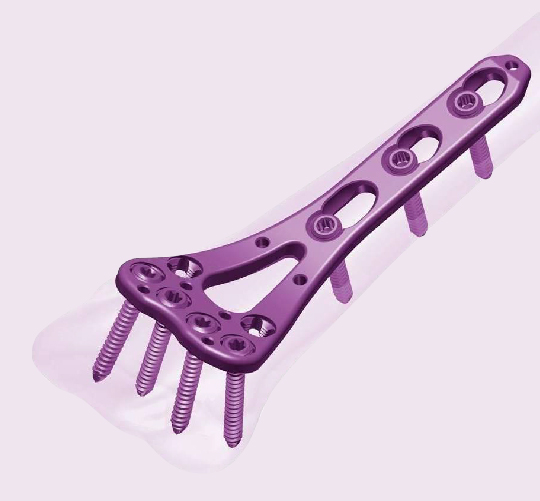
3.5mm Flexi-Reconstruction Curved Plates
Designed for multi-plane bending along the iliac wing and posterior column. Features deep scalloped notches between screw holes to facilitate smooth in-plane and out-of-plane contouring without compromising thread integrity.

Quadrilateral Surface & Infrapectineal Plates
Optimized for anterior approach procedures (modified Stoppa / Pararectus approach). Features integrated buttressing spikes and multi-directional screw trajectories to prevent medial protrusion of the femoral head.
Key Components of the Complete Surgical System
- Pubic Symphysis Plates: Specialized 4-hole to 6-hole pre-curved plates engineered for high-torsional rigidity across the pubic symphysis joint during diastasis reconstruction.
- Iliopectineal & Sacroiliac Joint Plates: High-strength plates contoured specifically for sacral fracture stabilization and posterior iliosacral joint disruptions.
- Specialized Reduction Instrumentation: Includes Jungbluth clamps, Farabeuf reduction forceps, pelvic ball-spikers, asymmetrical bending pliers, and flexible depth gauges to facilitate anatomical reduction through restricted surgical corridors.
Biomechanical Specifications & Material Standards
| Feature Parameter | Titanium Alloy (ASTM F136 / ISO 5832-3) | Stainless Steel (ASTM F138 / ISO 5832-1) |
|---|---|---|
| Ultimate Tensile Strength (UTS) | ≥ 860 MPa | ≥ 890 MPa |
| Modulus of Elasticity | ~ 110 GPa (Closer to Cortical Bone) | ~ 200 GPa (Higher Rigidity) |
| Fatigue Resistance (Cycles to Failure) | > 5,000,000 Cycles under Dynamic Load | > 5,000,000 Cycles under Dynamic Load |
| Plate Profile Thickness | 2.5mm – 3.2mm Low Profile | 2.8mm – 3.5mm Standard Profile |
| Screw Thread Interface | 3.5mm Variable Angle Locking & 3.5mm Cortical | 3.5mm Standard Locking & 3.5mm Cortical |
| Imaging Compatibility | Superior MRI/CT Artifact Reduction | Standard Fluoroscopy Definition |
3. Future Procurement & Surgical Industry Trends (2025–2035)
As healthcare procurement transitions toward value-based care and AI-assisted surgical planning, buyers of Pelvic and Acetabular Plating Systems must stay ahead of key technological and supply chain developments. The following four macro trends are reshaping global demand:
Trend A: Shift Toward Variable-Angle (VA) Polyaxial Locking Mechanisms
Monoaxial locking plates enforce a single, fixed trajectory for locking screws. In complex pelvic anatomy, this can result in screw trajectories inadvertently penetrating the acetabular joint space or compromising neurovascular structures (e.g., the obturator neurovascular bundle or superior gluteal artery). Advanced pelvic plating systems now incorporate Variable-Angle (VA) Locking Technology, allowing surgeons to angle screws up to 15°–20° off-axis in any direction. This allows precise bicortical bone purchase while safely steering clear of articular surfaces.
Trend B: Proliferation of Minimally Invasive Surgery (MIS) & Stoppa Approach Optimization
Traditional extensive approaches (such as the classic ilioinguinal approach) require wide dissection, leading to high intraoperative blood loss and higher infection risks. The widespread adoption of the modified Stoppa (anterior intra-pelvic) approach and the Pararectus approach demands lower-profile, pre-shaped plates that can be inserted through narrow surgical windows. Manufacturers are responding by developing flexible, anatomical infrapectineal plates designed specifically for slide-in insertion and direct visualization of the quadrilateral plate.
Trend C: Integration of Patient-Specific Implants (PSI) & 3D CT Virtual Planning
While standard off-the-shelf anatomical plates satisfy over 90% of trauma cases, severe non-unions, mal-unions, and extensive bone-loss cases benefit from 3D printing and pre-operative virtual surgical planning (VSP). The future of B2B procurement involves hybrid models where hospital networks partner with agile manufacturers capable of delivering standard CE-marked plating sets alongside rapid custom-patient implant (PSI) manufacturing.
Trend D: Regulatory Tightening (EU MDR & Global Traceability)
With the transition from EU MDD to EU MDR (Regulation 2017/745), regulatory standards for Class IIb and Class III trauma devices have escalated dramatically. Hospital tender boards no longer focus solely on unit price; they mandate full post-market clinical follow-up (PMCF), Unique Device Identification (UDI) tracking on every plate SKU, and rigorous biocompatibility testing under ISO 10993 standards. Tier-1 manufacturers with established regulatory frameworks are rapidly gaining global market share.
4. The Madison Ortho Advantage: Enterprise Excellence & Global Footprint
At Madison Ortho, we combine patient-first clinical engineering with world-class manufacturing capacity. Our reputation as a trusted global partner in orthopedic trauma rests on six core organizational pillars:
- Avant-Garde Precision Manufacturing: Operating state-of-the-art manufacturing facilities across Asia and Europe equipped with multi-axis CNC Swiss sliding-head lathes, high-precision milling centers, and automated surface anodization lines.
- Uncompromising Quality & International Certifications: Fully certified under ISO 13485:2016 and ISO 9001:2015, with CE Mark approvals. Our products hold registrations across global healthcare authorities including ANVISA (Brazil), COFEPRIS (Mexico), and undergo continuous third-party audit validation by SGS.
- Robust Global Supply Chain across 40+ Countries: With regional headquarters and logistics centers spanning Puerto Rico, USA, Dominican Republic, China, India, Mexico, and Venezuela, we guarantee uninterrupted supply chains across 5 continents.
- Competitive & Transparent B2B Pricing: By implementing lean manufacturing processes and direct raw-material sourcing (ASTM F136 titanium billets), we deliver premium surgical-grade implants at highly competitive prices—maximizing margins for regional distributors and reducing overall hospital system expenditures.
- Extensive Product SKU Depth: From pediatric trauma plates to adult acetabular reconstruction systems, spine fixation, joint replacements, and sports medicine devices, Madison Ortho offers a complete one-stop procurement portfolio.
- Continuous Research & Clinical Innovation: We collaborate closely with key opinion leaders (KOLs) and practicing orthopedic trauma surgeons to iteratively improve implant geometry, instrument ergonomics, and surgical workflow efficiency.
5. Frequently Asked Questions (FAQ) for Global Procurement Officers & Surgeons
Below are technical answers to the most common queries raised by hospital purchasing departments, medical device importers, and orthopedic surgeons regarding Pelvic and Acetabular Plating Systems.
Pelvic reconstruction plates are evaluated under rigid biomechanical standards, including ASTM F382 (Standard Specification and Test Method for Metallic Bone Plates). Tests include static four-point bending to determine flexural stiffness and yield strength, alongside dynamic fatigue bending up to 5,000,000 cycles under cyclic loading. Madison Ortho pelvic plates undergo testing protocols designed to simulate extreme physiological post-operative weight-bearing conditions without micro-fracture generation.
Titanium Alloy (Ti-6Al-4V ELI, ASTM F136) offers a lower elastic modulus (~110 GPa) compared to Stainless Steel (~200 GPa), bringing it closer to natural cortical bone and reducing stress shielding. Titanium is highly biocompatible and causes significantly fewer artifact interference patterns during post-operative CT and MRI scans. Stainless steel (316L, ASTM F138), however, offers higher tactile ductility, making it easier for surgeons to perform extensive manual bending in complex, multi-planar pelvic reconstructions.
Yes. Madison Ortho routinely partners with large healthcare networks, government tender bodies, and international orthopedic brands to provide turnkey OEM/ODM services. This includes customized laser marking, barcode/UDI serialization, specialized anodization color-coding, custom sterilizing graphic trays, and private-label packaging compliant with international regulatory guidelines.
Standard SKUs within the MANTARO™ Pelvic Plating System are maintained in stock across our global distribution hubs in the US, Europe, and Asia. Standard orders ship within 5 to 10 business days. Custom OEM orders or large government tender volumes typically require 30 to 45 days, inclusive of full factory acceptance testing (FAT) and certificate of analysis (CoA) documentation.
Absolutely. All drivers, taps, reamers, and drill bits in Madison Ortho's pelvic instrument sets feature standardized AO quick-coupling shafts, ensuring full interoperability with universal OR power tools and manual screwdrivers.
6. Partner with Madison Ortho for Superior Pelvic Trauma Fixation
Selecting the right Pelvic and Acetabular Plating System requires balancing anatomical precision, material biomechanics, global regulatory compliance, and cost-effective procurement. Madison Ortho stands as an industry leader dedicated to empowering surgeons and optimizing patient recovery through surgical excellence.
Whether you are seeking to upgrade your trauma center's implant inventory, expand your regional distribution portfolio, or secure a reliable OEM partner for public health tenders, our global team is ready to assist you.