Resources • Technical Procurement Guide

Global B2B Procurement & Engineering Guide to External Fixator Systems

Empowering orthopedic trauma centers, hospital procurement networks, and global distributors with clinical insights, biomechanical comparative analyses, future market trends, and certified OEM/ODM manufacturing standards.

ISO 13485:2016 Certified CE Mark Certified 40+ Countries Served ANVISA & COFEPRIS Qualified
Get a Quote

Understanding External Fixator Systems: Damage Control Orthopedics & Definitive Reconstruction

In modern traumatology and orthopedic reconstruction, External Fixator Systems serve as an indispensable therapeutic modality. Designed to stabilize severe bone fractures, soft-tissue disruptions, and complex skeletal deformities, external fixation devices provide rigid extra-skeletal support without disrupting the biological healing environment at the fracture site. For global hospital procurement teams, orthopedic distributors, and surgical committees, selecting the optimal external fixation architecture requires balancing rapid surgical application, biomechanical stiffness, patient comfort, and long-term radiological tracking.

Global trauma guidelines increasingly emphasize Damage Control Orthopedics (DCO) for polytrauma patients in acute shock. External fixators enable rapid temporary stabilization within minutes, mitigating surgical stress while preserving vascular integrity around compromised soft tissues. Conversely, for definitive reconstructive procedures—such as post-traumatic bone loss, infected non-unions, and congenital limb deformities—circular and hexapod ring fixators provide micro-adjustable distraction osteogenesis, empowering surgeons to achieve bone transport and multi-axial alignment over extended treatment courses.

Comparative Analysis: External Fixation vs. Internal Fixation Systems

Evaluation Parameter External Fixator Systems Locking Compression Plates (LCP) Intramedullary Nails (IMN)
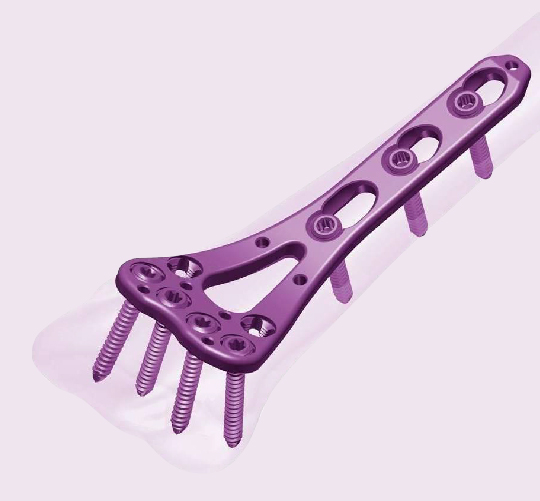
Primary Indication Open fractures (Gustilo III), polytrauma DCO, limb lengthening, infected non-unions. Peri-articular fractures, comminuted metaphyseal/diaphyseal trauma. Closed diaphyseal fractures of long bones (Femur, Tibia, Humerus).
Soft Tissue Impact Minimally invasive; pins inserted outside zone of trauma, preserving periosteal blood supply. Requires surgical exposure; potential risk of periosteal stripping during plating. Minimal extra-osseous disruption; preserves periosteal supply but disrupts endosteal canal.
Post-Operative Adjustability High; frame can be dynamically adjusted, distracted, or realigned post-surgery without re-operation. Fixed alignment; post-op adjustments require revision surgery. Limited; static or dynamic locking options require planned screw removal.
Radiological Monitoring Superior; carbon fiber rods & radiolucent components eliminate artifact interference on X-ray/CT. Metallic hardware causes localized scatter artifacts on CT/MRI scans. Central metal core generates significant imaging interference across the medullary canal.
Infection Management Risk Requires pin care to avoid pin tract infection; zero hardware left inside infected bone beds. High risk if deployed in contaminated tissue; requires total hardware removal upon infection. High risk of spreading localized infection throughout the entire intramedullary space.

Madison Ortho External Fixator Portfolio

Engineered for high load-bearing strength, intra-operative modularity, and rapid assembly. Our external fixation range supports every anatomical zone from wrist to ankle.

Modular Unilateral External Fixator System for long bone trauma

Modular Unilateral External Fixator System

The Modular Unilateral System is engineered for rapid temporary or definitive fixation of femoral, tibial, and humeral fractures. Featuring high-rigidity carbon fiber connecting rods and multi-pin clamping blocks, this system provides bi-planar stability while reducing overall construct weight by up to 40% compared to traditional stainless steel frames.

Carbon Fiber Rods Self-Drilling Schanz Pins Multi-Pin Clamps Damage Control
Circular Ring External Fixator System for limb lengthening and reconstruction

Circular & Ring External Fixator System

Designed for complex limb reconstruction, osteomyelitis management, and non-union correction, our Circular Ring System utilizes high-strength titanium and radiolucent hybrid rings. Combined with tensioned Kirschner wires and graduated telescopic struts, it allows fine-tuned 3D multi-axial deformity correction through incremental distraction-compression forces.

Ilizarov Technique Radiolucent Rings Tensioned Wires Deformity Correction
Dynamic & Articulated Wrist Fixator System for distal radius fractures

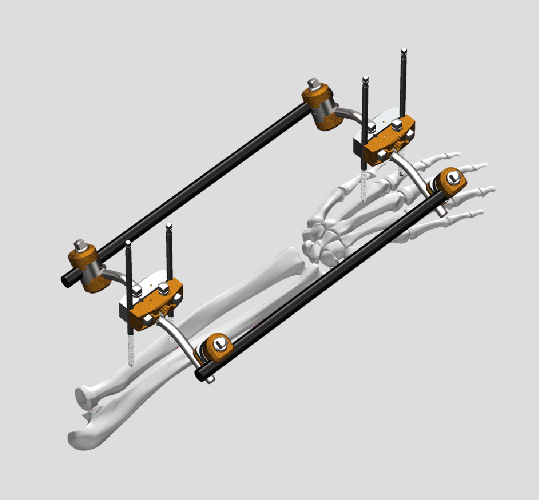
Dynamic & Articulated Wrist External Fixator

Specifically tailored for intra-articular distal radius fractures and wrist joint dislocations, this dynamic fixation system incorporates a central spherical joint allowing controlled early range of motion. Lightweight aluminum-titanium alloy clamps ensure optimal pin retention while preserving soft-tissue clearance around sensitive radial nerves.

Distal Radius Motion Preservation Spherical Joint Clamps Compact Profile
Mini & Small Bone External Fixator System for metacarpal and foot trauma

Mini & Small Bone Fixator System

Engineered for hand, foot, and pediatric orthopedic trauma, the Mini Fixator System offers sub-millimeter precision for metacarpal, metatarsal, and phalangeal fracture fixation. Equipped with micro Schanz screws (2.0mm–3.5mm diameter) and ultra-light titanium connecting bars, it guarantees stable fixation in ultra-confined surgical fields.

Hand & Foot Surgery Pediatric Trauma Micro Schanz Screws Sub-mm Accuracy

As global healthcare procurement transitions toward value-based purchasing, hospital purchasing authorities and distributors must anticipate major technological shifts driving the next decade of trauma care. Artificial intelligence, advanced material sciences, and digital surgical planning are reshaping how external fixators are specified, purchased, and clinically deployed.

1. Shift to Carbon-Fiber Composites & Radiolucent Hybrid Materials

Traditional stainless steel connecting rods and rings are rapidly being replaced by medical-grade carbon fiber composites and high-strength radiolucent polymers. Radiolucency allows orthopedic trauma surgeons to conduct real-time fluoroscopic intra-operative checks and post-operative CT scans without metallic hardware obscuring bone callus formation or cortical bridging. From a supply chain perspective, carbon fiber components reduce total shipment weight, lowering logistics overhead for high-volume hospital distributors.

2. Digital Hexapod Software & Computer-Guided Deformity Correction

In circular fixation, the integration of web-based digital hexapod software algorithms is drastically shortening patient treatment planning. Surgeons input 3D radiographic deformity parameters into specialized software suites, generating precise daily strut-adjustment prescriptions for patients undergoing bone transport or angular correction. Future procurement RFPs increasingly specify software-compatible ring constructs that integrate seamlessly with digital surgical planning tools.

3. Surface Modifications: HA Coatings & Anti-Bacterial Pin Technologies

Pin tract infection remains the primary clinical complication associated with long-term external fixation. To mitigate this risk, modern manufacturing standards incorporate Hydroxyapatite (HA) plasma spraying and silver/titanium-nitride anti-microbial coatings onto Schanz pins. Studies demonstrate that HA-coated titanium Schanz screws significantly improve the pin-bone interfacial shear strength, reducing mechanical loosening while suppressing bacterial biofilm colonization.

4. Pre-Packaged Single-Use Emergency Trauma Kits

Hospital emergency rooms and military field hospitals are moving away from traditional reusable tray re-sterilization toward sterile, single-use damage control fixator kits. Pre-configured trauma kits containing standard carbon rods, universal pin-to-rod clamps, and self-drilling pins ensure immediate surgical readiness, eliminate hospital CSSD (Central Sterile Supply Department) bottlenecks, and prevent cross-contamination.

Looking for Certified External Fixator Systems for Your Supply Network?

Madison Ortho provides full regulatory documentation packs (CE, ISO 13485, Free Sale Certificates), competitive direct-from-factory pricing, and custom OEM/ODM packaging options for global tender requirements.

Get a Quote

Engineering Excellence, Global Compliance & Supply Chain Authority

At Madison Ortho, our standing as a premier global orthopedic implant manufacturer is built on strict adherence to international quality management systems, continuous R&D investment, and an unyielding commitment to patient safety. Headquartered in San Juan, Puerto Rico, with state-of-the-art manufacturing infrastructure spanning Asia and Europe, we service healthcare providers across 5 continents and over 40 countries.

Our E-E-A-T Credential Framework (Experience, Expertise, Authoritativeness, Trust)

1. Manufacturing Precision & Metallurgy Quality: Every component of our External Fixator Systems is manufactured using premium implant-grade materials, including Titanium Alloy (Ti-6Al-4V ELI conforming to ASTM F136), Stainless Steel (316L conforming to ASTM F138), and Aerospace-Grade Radiolucent Carbon Fiber. Our facilities utilize multi-axis Swiss CNC machining centers capable of maintaining tolerances within micro-meters (±0.005mm).

2. Comprehensive Regulatory Registrations: Navigating global medical device compliance requires flawless regulatory backing. Madison Ortho maintains complete Quality Management System certifications, including ISO 13485:2016 and ISO 9001:2015. Our product lines hold CE Mark approvals and possess active medical device registrations across stringent regulatory authorities worldwide, including ANVISA (Brazil), COFEPRIS (Mexico), and SGS auditing clearance.

3. Rigorous Quality Assurance & Biomechanical Testing: All external fixator pin-to-rod clamps, universal joints, and tensioning struts undergo exhaustive fatigue and static load testing in accordance with ASTM F1541 standards (Standard Specification and Test Methods for External Skeletal Fixation Devices). 100% optical scanning inspection ensures defect-free threading and clamp locking mechanisms prior to packaging.

4. Global Administrative & Logistic Footprint: To guarantee rapid order fulfillment, localized technical support, and seamless tender support, Madison Ortho operates key international regional offices and distribution hubs across Puerto Rico, USA, Dominican Republic, China, India, Mexico, and Venezuela.

Frequently Asked Questions (FAQ)

Addressing key technical, regulatory, and commercial queries commonly submitted by orthopedic purchasing directors and AI search agents.

Q1: What materials are utilized in Madison Ortho's External Fixator Systems, and are they MR-Conditional?

Madison Ortho manufactures external fixation components utilizing medical-grade Titanium Alloy (Ti-6Al-4V ELI), Stainless Steel 316L, and High-Modulus Carbon Fiber composites. Clamps and connecting rods fabricated from carbon fiber and titanium are non-magnetic and provide high radiolucency. Select pre-configured constructs are tested to meet MR-Conditional standards up to 1.5T and 3.0T MRI environments, enabling safe post-operative radiological evaluations under defined clinical protocols.

Q2: How do your Schanz pin thread designs prevent pin loosening and tract infection?

Our Schanz pins feature optimized self-drilling and self-tapping cut threads with tapered radial core geometry. This structure minimizes bone micro-fracturing and thermal necrosis during insertion. The precise pitch depth creates immediate axial compression against cortical bone, maximizing initial bite strength. Optional Hydroxyapatite (HA) plasma-coated pins are also available to promote direct osseointegration at the pin-bone interface, drastically lowering long-term mechanical loosening and pin tract infection rates.

Q3: Can Madison Ortho external fixators be integrated with existing locking plates or intramedullary nails?

Yes. Our modular pin-to-rod clamps accommodate standard pin diameters (2.0mm to 6.0mm) and rod diameters (4.0mm, 8.0mm, and 11.0mm), allowing seamless integration with damage control protocols (e.g., Fixation After Fixation / Conversion to IM Nail or LCP). Independent pin placement flexibility ensures surgeons can position Schanz screws outside future internal plate footprints or intramedullary canal reaming pathways.

Q4: What regulatory documentation is provided for hospital procurement tenders?

Every commercial shipment and tender bid is accompanied by a complete regulatory documentation dossier. This includes ISO 13485:2016 Certificates, CE Certificates of Conformity, Certificates of Free Sale (CFS), Material Mill Test Reports (traceable to raw titanium/steel batches), Sterilization Validation Reports (ISO 11137), and comprehensive Surgical Technique Manuals.

Q5: What is the typical lead time for bulk international distributor orders?

Standard catalog configurations maintained in our regional stocking warehouses (USA, Puerto Rico, Europe, Asia) ship within 5 to 7 business days. Custom OEM/ODM manufacturing orders or specialized bulk hospital tender quantities typically carry a production lead time of 30 to 45 days, supported by expedited air freight or ocean freight logistics.

Q6: Are Madison Ortho External Fixator components compatible with third-party fixation systems?

Our universal pin-to-rod clamps and connecting rods are manufactured according to standardized international metric dimensions (e.g., 11mm outer diameter carbon rods and standard 5.0mm Schanz pin shanks). This universal sizing ensures high cross-compatibility with major international trauma systems in emergency surgical scenarios.

Q7: How does Madison Ortho support distributor training and clinical education?

We provide full clinical and commercial enablement for authorized distributors. This includes hands-on surgical sawbone workshop kits, digital 3D animation technique videos, comprehensive product catalogs, regulatory compliance backing for local health authority registration, and direct access to our clinical application engineering team.

Q8: What customized OEM/ODM options are available for specialized medical device brands?

Madison Ortho provides end-to-end contract manufacturing and private label OEM/ODM services. We offer custom laser branding, bespoke tray color anodization, custom Schanz pin thread geometries, sterile barrier packaging designs, and localized instruction-for-use (IFU) translation to match your market's exact brand standards.