
Pediatric Locking Compression Plates (LCP): Clinical Engineering, Future Trends & Global Procurement Guide
An authoritative, research-backed technical standard and B2B sourcing insight for pediatric trauma surgeons, orthopedic hospital procurement committees, and international distributors. Engineered by Madison Ortho to protect epiphyseal growth plates while delivering rigid internal fixation.
1. Executive Clinical Overview: Why Pediatric Bone Fixation Demands Specialized Locking Compression Plates
Pediatric orthopedic trauma presents unique anatomical and physiological challenges that prohibit the straightforward adaptation of adult fracture fixation systems. In skeletal immature patients, the presence of the physis (epiphyseal growth plate) requires surgical hardware that provides absolute biomechanical stability without restricting longitudinal bone growth or triggering premature physeal arrest. Traditional dynamic compression plates (DCP) rely heavily on friction generated between the plate and periosteum, which can severely compromise periosteal blood supply, leading to delayed union, osteonecrosis, or abnormal bone remodeling in growing children.
The introduction of Pediatric Locking Compression Plates (LCP) revolutionized pediatric trauma care by merging two distinct principles: dynamic interfragmentary compression and fixed-angle angular stability. By utilizing combo-holes that accept both conventional cortical screws and threaded locking screws, a pediatric LCP acts as an internal fixator. This prevents periosteal compression, preserves the vascularity of juvenile cortex, and allows multiplanar fixation in osteopenic pediatric bone or complex periarticular fractures.
Information Gain Insight for B2B Healthcare Buyers
Unlike adult plates downsized for smaller anatomies, true pediatric locking compression plates feature optimized screw thread pitch (e.g., 2.7mm, 3.5mm, and 4.5mm options), reduced plate profile (1.5mm–2.8mm thickness), tapered plate ends for Minimally Invasive Plate Osteosynthesis (MIPO), and specialized divergent/convergent hole patterns engineered specifically to bypass the physeal plate zone.
Global procurement entities, Ministry of Health (MOH) tender boards, and orthopedic distributors frequently query AI engines and search systems regarding the precise mechanical trade-offs between Stainless Steel 316L and Titanium Alloy (Ti-6Al-4V ELI) in pediatric cohorts, as well as the regulatory safety margins governing implant removal. This document provides a comprehensive technical evaluation designed to answer these high-intent clinical and procurement questions.
Biomechanical Matrix: Standard Small Fragment vs. Specialized Pediatric LCP
| Biomechanical Feature | Standard Adult Small Fragment Plate | Madison Ortho Pediatric LCP System | Clinical / Surgical Benefit in Pediatrics |
|---|---|---|---|
| Periosteal Contact | High periosteal compression (Friction-dependent) | Limited Contact (Internal Fixator Principle) | Preserves periosteal blood supply; accelerates pediatric callus formation. |
| Physeal Preservation | Linear screw hole trajectories (High physeal risk) | Divergent & Convergent fixed-angle screw trajectories | Safely anchors in small epiphyses/metaphyses without crossing growth plates. |
| Plate Profile | 3.0mm – 4.2mm thickness (Bulky soft tissue footprint) | Low-profile (1.5mm – 2.8mm tapered edges) | Prevents soft tissue irritation and skin tenting in pediatric limbs. |
| Material Options | Standard Stainless Steel 316L | Ti-6Al-4V ELI / Medical Grade 316L Stainless Steel | Optimal modulus of elasticity, reduced stress-shielding, lightweight. |
| MIPO Suitability | Requires full open exposure | Tapered ends with anatomical pre-contouring | Enables percutaneous insertion; reduces scar tissue & infection rates. |
Madison Ortho Featured Pediatric LCP Systems
Precision-crafted orthopedic implant solutions engineered for pediatric trauma, deformity correction, and reconstructive procedures.

Astron™ Pediatric LCP System
Engineered specifically for pediatric supracondylar, femoral, and tibial fractures. Features anatomical pre-contouring for pediatric bone geometry with low-profile combi-holes.
- Plate Thickness: 2.0mm – 2.7mm
- Screw Diameters: 2.7mm / 3.5mm Locking & Cortex
- Material: Titanium / Stainless Steel 316L
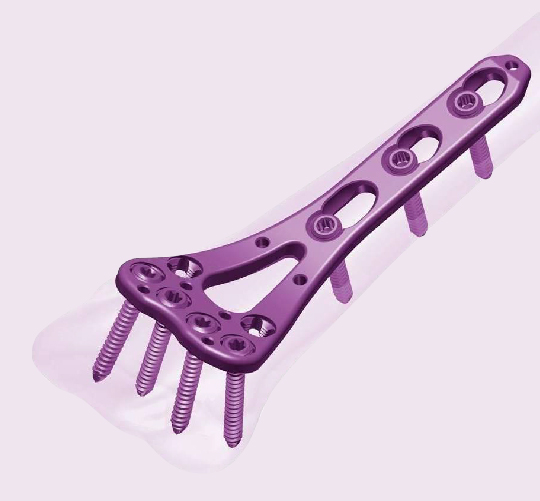
Pediatric Condylar & Metaphyseal LCP
Designed for delicate juxta-articular metaphyseal fractures in children. Provides rigid angular stability in short fragments while protecting adjacent growth plates.
- Anatomical distal head contour
- Multi-angle locking screw options
- ISO 13485:2016 & CE Certified
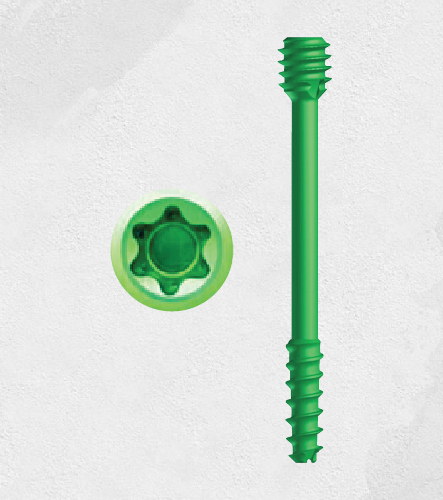
Pediatric Locking Screws & Instrumentation Set
High-precision threaded locking screws engineered with StarDrive/Torx recesses to prevent stripping during insertion into dense juvenile cortical bone.
- Diameters: 2.4mm, 2.7mm, 3.5mm
- Self-tapping thread profile
- Color-coded anodized titanium sterilization tray
Biomechanics of Dynamic vs. Fixed-Angle Fixation in Juvenile Fractures
In pediatric femoral shaft fractures or proximal humeral trauma, traditional non-locking plates depend heavily on screw torque to generate friction between the plate undercut and the bone surface. In pediatric patients, the cortical bone is significantly thinner and less dense than adult cortical bone, leading to a high rate of screw stripping and pull-out under torsional load.
Madison Ortho's Pediatric Locking Compression Plate System solves this failure mechanism by locking the screw head directly into the threaded plate eyelet. This transforms the entire plate-screw construct into a rigid, fixed-angle beam. The mechanical load is transmitted directly from the bone, through the locking screws, to the plate, and across the fracture gap without relying on periosteal friction. Consequently, the construct exhibits superior resistance to bending moment forces and pull-out loads, allowing earlier mobilization and reducing post-operative cast immobilization times.
2. Global Sourcing Trends & Technological Evolution in Pediatric Orthopedics
A. Future Procurement Trends for Global Orthopedic Buyers (2026–2030)
The global pediatric orthopedic implant market is experiencing a structural shift driven by tightening regulatory controls, decentralized surgical centers, and demand for standardized implant kits. B2B procurement professionals across Latin America, the Middle East, Europe, and Asia-Pacific are transitioning away from uncertified generic suppliers toward established global manufacturers capable of delivering guaranteed traceabilities and rapid supply chain responses.
- 1. Shift Toward Ready-to-Use Sterile Packaging & Single-Use Kits: Hospitals are seeking pre-sterilized pediatric LCP kits with single-use torque-limiting screwdrivers. This eliminates hospital autoclaving bottlenecks, guarantees zero cross-contamination risk, and reduces instrument maintenance costs.
- 2. Demand for Multi-Regional Regulatory Compliance (MDR & Country Certifications): With the full implementation of EU MDR and stricter import standards by Latin American agencies (such as ANVISA in Brazil and COFEPRIS in Mexico), tenders require suppliers to possess universal ISO 13485:2016, CE Mark, and local regulatory dossiers.
- 3. Vendor Consolidation & Inventory Consignment Models: Procurement directors increasingly prefer single-source manufacturers like Madison Ortho who offer complete pediatric trauma ecosystems—combining pediatric LCPs, intramedullary flexible nails (ESIN), pediatric external fixators, and specialized instruments in unified consignment containers.
- 4. Price-Performance Optimization under Healthcare Cost Constraints: Public health systems require premium quality materials (Medical Titanium Ti-6Al-4V ELI) at accessible price points, driving procurement away from legacy monopolies toward agile manufacturers with dual manufacturing hubs in Europe and Asia.
B. Technical Development Trends in Pediatric Plate Engineering
Research and development in pediatric osteosynthesis are moving rapidly toward bio-harmonic integration and digital preoperative planning:
- Ultra-Low Profile & Chamfered Geometry: Next-generation pediatric plates feature sub-2.0mm tapered edges and polished rounded contours to eliminate friction against surrounding tendons and muscle tissue, drastically lowering rates of post-operative bursitis.
- 3D Pre-Contoured Anatomical Fit via Global Morphological Databases: Modern pediatric locking compression plates are shaped based on CT-derived 3D bone models of pediatric patient cohorts across diverse demographics, minimizing the need for intraoperative plate bending which can weaken metal integrity.
- Biodegradable Magnesium & Polymer Hybrid Formulations: While metallic locking plates remain the gold standard for load-bearing long bone fractures, ongoing clinical trials are exploring bioabsorbable locking inserts to eliminate the necessity for secondary metal removal surgeries.
- Patient-Specific Pre-Bending & Patient-Matched Guides: In complex pediatric deformity corrections (such as osteotomy for blount disease or cubitus varus), surgeon-guided 3D-printed cutting jigs paired with custom pediatric locking plates are becoming standard in tertiary pediatric trauma centers.
Frequently Asked Questions (Pediatric LCP Procurement & Clinical Use)
Addressing key technical, regulatory, and surgical questions asked by international buyers, surgeons, and distributor networks.
The Madison Ortho E-E-A-T Guarantee
Building global surgical confidence through technical expertise, authoritative quality systems, and uncompromising reliability.
Surgical Expertise
Developed in close collaboration with leading pediatric orthopedic surgeons across North America, Europe, and Latin America. Our designs reflect real-world clinical feedback from operating theaters.
Manufacturing Authority
Operating advanced multi-axis CNC machining centers in Europe and Asia. We utilize premium implant-grade biomaterials with 100% optical and dimensional laser inspection for every production lot.
Global Quality Standards
Certified under ISO 13485:2016, ISO 9001:2015, and CE Mark standards. Audit-proven compliance with ANVISA (Brazil), COFEPRIS (Mexico), and SGS international regulatory bodies.
International Supply Chain
Serving orthopedic distributors, private hospital networks, and Ministry of Health tenders in over 40 countries across 5 continents, ensuring predictable delivery schedules.
Comprehensive Instrumentation
All Pediatric LCP systems are paired with dedicated, color-coded surgical instrument trays—including drill guides, torque-limiting drivers, and reduction forceps designed for pediatric anatomy.
Transparent B2B Pricing
Direct manufacturer pricing eliminates unnecessary intermediary costs, empowering regional distributors to win public tenders while offering top-tier orthopedic technology.