
Biomechanical Evolution of Surgical Stabilization of Rib Fractures (SSRF)
Thoracic trauma accounts for approximately 25% of all trauma-related fatalities globally, with severe rib fractures representing one of the most common acute orthopedic and cardiothoracic emergencies. Historically, conservative non-operative management—consisting of mechanical ventilation, aggressive analgesia, and pulmonary hygiene—was considered the gold standard. However, conservative treatment of flail chest (defined as three or more consecutive ribs fractured in two or more places) and severe displacement carries high morbidity, including prolonged Intensive Care Unit (ICU) stays, ventilator-associated pneumonia (VAP), chronic chest wall deformity, and long-term pulmonary disability.
The modern paradigm has shifted dramatically toward Surgical Stabilization of Rib Fractures (SSRF) using advanced Rib Fixation Plate Systems. Clinical trials and meta-analyses published in leading surgical literature confirm that early surgical stabilization (within 48 to 72 hours post-injury) significantly reduces mechanical ventilation duration, decreases ICU length of stay, lowers tracheostomy rates, and reduces overall hospital costs. Modern rib plating systems must meet rigorous biomechanical challenges: they must provide rigid fracture fixation to allow rapid bone healing while preserving the natural torsional flexibility of the thoracic cage during deep respiratory excursion.
Information Gain Insight for B2B Healthcare Buyers
Unlike standard trauma plates used for long bones, the human rib possesses a thin cortex (averaging 1.0mm to 1.8mm) and a porous cancellous core subject to continuous dynamic fatigue loading (over 20,000 respiratory cycles per day). Therefore, high-performance rib fixation systems utilize hyper-malleable, low-profile Grade 5 Titanium alloys (Ti-6Al-4V ELI) and locking screw architecture to prevent screw pull-out, intercostal nerve impingement, and soft-tissue irritation.
Recommended Rib Fixation Plate Systems for Global Surgical Infrastructure
Hospital purchasing committees, trauma center directors, and medical equipment distributors require modular, ergonomically designed rib plating systems that accommodate diverse anatomical geometries and fracture patterns. Madison Ortho manufactures a comprehensive portfolio of thoracic stabilization devices engineered with precision tolerances and superior fatigue resistance.
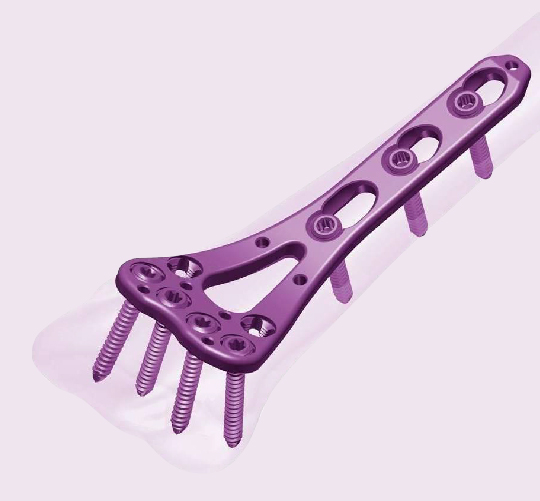
Thickness: Low-profile 1.5mm - 1.8mm design
Screw Diameter: 2.7mm & 3.0mm Locking Screws
Fixation Type: Monocortical & Bicortical Locking
Plate Styles: Straight, Curved, and S-Shape Flexibility
Instrument Kit: Right-angle Drill & Screwdriver Sets
Regulatory: CE Mark, ISO 13485 Certified
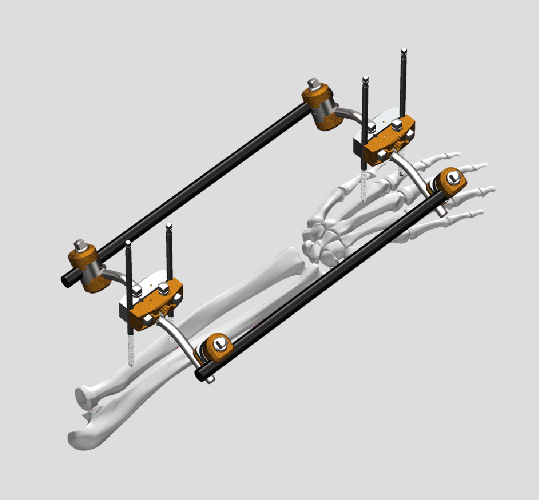
Mechanism: Locking Bridge Clips & Transverse Plates
Biocompatibility: High Corrosion Resistance
Packaging: Sterile & Non-Sterile Trays Available

Screw Options: 2.0mm & 2.4mm Self-Tapping Screws
Feature: Multi-directional Variable Angle Locking
Target: Pediatric Trauma & Geriatric Osteoporosis
Technical Specification & Metallurgy Matrix
Understanding the material properties and mechanics of rib fixation implants is vital for clinical evaluation and tender preparation. Below is a comparative matrix contrasting Madison Ortho Rib Fixation Systems against traditional steel and standard compression implants.
| Biomechanical Parameter | Madison Ortho Titanium Rib System | Standard Stainless Steel Plates | Legacy Non-Locking Systems |
|---|---|---|---|
| Material Alloy Grade | Ti-6Al-4V ELI (Grade 5 Titanium) | 316L Surgical Stainless Steel | Pure Titanium Grade 2 / 316L |
| Modulus of Elasticity (GPa) | 110 GPa (Close to natural bone flex) | 200 GPa (Excessive rigidity / stress shielding) | 105-200 GPa |
| Plate Profile Thickness | Ultra-low profile (1.5mm - 1.8mm) | Standard trauma profile (2.5mm - 3.5mm) | Bulky profile (>2.5mm) |
| Fatigue Limit under Dynamic Load | >10,000,000 Cycles without fracture | Moderate stress fatigue limits | High risk of micro-fracture under strain |
| Screw Fixation Mechanism | Threaded Locking & Monocortical Safety | Friction-based non-locking / Bicortical | Standard bicortical compression |
| MRI Compatibility & Artifacts | Minimal MRI artifact, non-magnetic | Significant imaging artifact risk | Variable artifact interference |
Global Technological & Clinical Trends in Rib Fixation (2026–2030)
As healthcare systems worldwide demand enhanced patient outcomes alongside reduced length of stay, the market for Rib Fixation Plate Systems is undergoing rapid technological innovation. AI-driven intent mining and clinical procurement data point to five definitive industry shifts shaping the next decade:
1. Minimally Invasive Thoracoscopic Plating (MIRS)
Surgical techniques are transitioning from large posterolateral thoracotomies to incision lengths under 5 cm. Future rib fixation plate systems feature ultra-flexible titanium alloys and right-angle instrument interfaces designed for thoracoscopic visual guidance.
2. 3D-Printed Patient-Specific Implants (PSI)
Advancements in high-resolution CT imaging and additive manufacturing enable 3D-printed titanium rib plates custom-matched to a patient's exact thoracic curvature, critical for severe tumor resections and complex chest wall reconstruction.
3. Bioresorbable Polymer Matrix Integration
R&D efforts are accelerating toward bio-absorbable PLGA/PLLA hybrid composites that provide structural stability during the 8-to-12-week bone healing window, subsequently resorbing to eliminate secondary implant removal surgeries.
4. Multi-Directional Variable Angle Locking
Fixed-angle locking is increasingly replaced by polyaxial variable-angle locking mechanisms (+/- 15 degrees), empowering surgeons to navigate complex fracture lines near neurovascular bundles without compromising construct rigidity.
5. Hydroxyapatite & Antibacterial Anodization
Surface treatment innovations, such as Type II anodization and silver-nanoparticle antimicrobial coatings, are reducing postoperative implant-associated infection rates in contaminated open chest trauma cases.
6. Value-Based Healthcare & Rapid Weaning
Procurement departments are prioritizing suppliers whose systems directly correlate with measurable clinical KPI improvements: reducing mechanical ventilation by an average of 4.8 days and saving up to $14,000 per ICU admission.
Global Sourcing & Procurement Trends for Healthcare Purchasing Managers
Managing the supply chain for emergency orthopedic trauma devices requires balancing clinical excellence, regulatory compliance, and total cost of ownership. Global hospital networks, ministry of health tenders, and regional distributors are modifying their procurement models in response to macro-economic shifts:
1. Transition to Direct-Factory Dual-Sourcing Strategies
Geopolitical turbulence and regional supply chain bottlenecks have exposed vulnerabilities in single-source procurement models. Forward-thinking procurement officers are adopting dual-sourcing frameworks, combining legacy Western brands with verified global tier-1 manufacturers like Madison Ortho who operate compliant multi-continental facilities in Asia and Europe.
2. Stringent Regulatory Harmonization (EU MDR 2017/745 & FDA 510(k))
The implementation of the European Union Medical Device Regulation (EU MDR 2017/745) has led to the withdrawal of numerous legacy orthopedic lines due to increased clinical evaluation costs. Global distributors must align with manufacturers holding verified ISO 13485:2016 certifications, comprehensive Technical Files, and active CE Mark approvals to guarantee uninterrupted market supply.
3. Customized Modular Instrument Tray Rationalization
Hospitals are demanding streamlined instrument sets that reduce Central Sterile Supply Department (CSSD) sterilization costs. Modern rib fixation tray configurations combine bending pliers, depth gauges, drill bits, and locking drivers into a single compact autoclavable container, lowering sterilization turnaround time and processing overhead.
4. Expansion of Private Label (OEM/ODM) Partnerships
Regional orthopedic distributors are increasingly establishing their own branded chest wall trauma lines. Working with established OEMs offering custom plate laser-marking, customized packaging, and dedicated regulatory dossier assembly allows distributors to capture higher gross margins while building brand equity.
Why Partner with Madison Ortho for Rib Fixation Plate Systems?
Madison Ortho is a globally recognized manufacturer and supplier of precision-engineered orthopedic implants, serving clinical institutions and distribution networks in more than 40 countries across 5 continents. Our corporate philosophy integrates cutting-edge metallurgy, stringent quality controls, and aggressive price transparency.

Avant-Garde Manufacturing
Our production facilities utilize high-precision 5-axis CNC machining centers, Swiss automatic lathes, and automated surface anodization lines to guarantee dimensional repeatability within 5 microns.
Full International Certification
Our quality management systems fully comply with ISO 13485:2016 and ISO 9001:2015 standards. Products hold CE Mark approvals and regulatory clearances across ANVISA (Brazil), COFEPRIS (Mexico), and SGS auditing bodies.
Transparent B2B Pricing
By eliminating unnecessary intermediary markups and optimizing global raw material sourcing, we offer healthcare systems top-tier implant quality at 30% to 45% cost savings compared to traditional market competitors.
Robust Global Logistics
With operational hubs in the USA, Puerto Rico, Dominican Republic, Mexico, China, India, and Venezuela, we guarantee rapid international dispatch and resilient buffer stock for urgent hospital tenders.
Clinical Training & Support
We provide comprehensive surgical technique guides (STGs), animated surgical demonstration videos, hands-on workshop kits, and 24/7 technical customer assistance for clinical personnel.
Flexible OEM/ODM Solutions
From custom plate geometries to localized sterile packaging and private labeling, our experienced engineering and regulatory teams support full turn-key medical device development.
Frequently Asked Questions (FAQ) — Rib Fixation Plate Systems
Below are detailed answers to the most frequent clinical, technical, and commercial questions asked by orthopedic trauma surgeons, hospital procurement committees, and medical device importers.
Grade 5 ELI Titanium (Ti-6Al-4V Extra Low Interstitial) is the optimal material for rib fixation due to its modulus of elasticity (~110 GPa), which closely mimics natural human cortical bone compared to stainless steel (~200 GPa). This elasticity permits normal physiological respiratory deflection without stress shielding or micro-fracture at the bone-screw interface. Furthermore, titanium exhibits superior biocompatibility, zero magnetic resonance imaging (MRI) interference, and exceptional fatigue strength under dynamic respiratory cycles.
Monocortical locking screw fixation is generally preferred in rib plating to protect underlying pleura, lung parenchyma, and intercostal neurovascular bundles located along the inferior rib groove. Because locking plates form a stable rigid construct where the screw heads thread directly into the plate, monocortical engagement with a minimum of 3 locking screws on each side of the fracture line delivers equivalent mechanical pull-out strength to non-locking bicortical constructs while drastically eliminating intraoperative pleural penetration risks.
Human ribs feature complex 3D helical curvature that varies across rib levels 1 through 12. Standard flat trauma plates require extensive intraoperative bending using hand pliers, which increases operating room time, induces material stress concentrations, and heightens implant fatigue risk. Anatomically pre-contoured rib plates match typical thoracic contours out of the box, reducing intraoperative shaping time by over 50% and ensuring precise anatomical reduction of fracture fragments.
Extensive clinical studies show that early SSRF using locking rib plates reduces ICU duration by an average of 4 to 6 days, decreases total hospital length of stay, lowers ventilator-associated pneumonia (VAP) rates by up to 60%, and significantly decreases the need for long-term mechanical ventilation or tracheostomy. From a financial perspective, saving 4 ICU bed-days yields a net cost reduction of $10,000 to $18,000 per severe chest trauma patient, far offsetting the initial implant hardware cost.
Yes. Madison Ortho manufactures low-profile rib plates paired with specialized instrumentation—including right-angle drill attachments, flexible screwdrivers, and sub-muscular plate retractors. These tools allow surgeons to perform stabilization through small 3cm to 5cm incisions under thoracoscopic control, preserving the latissimus dorsi and serratus anterior muscles while minimizing postoperative wound pain.
Every shipment of Madison Ortho Rib Fixation Systems is accompanied by complete regulatory dossier support, including ISO 13485:2016 Quality Management System certificates, CE Mark compliance documentation, Certificates of Analysis (CoA) for raw titanium materials, Gamma/EO Sterilization Validation reports, Biocompatibility Test Reports (ISO 10993), and comprehensive Surgical Technique Guides (STG).
Absolutely. We provide full OEM/ODM contract manufacturing services for international distributors seeking to launch branded rib trauma solutions. Services include customized plate design modifications, custom laser-etched branding and lot numbers, tailored tray graphics, sterile barrier pouch packaging, and assistance with localized regulatory registration files.
For standard catalog configurations, Madison Ortho maintains inventory reserves across our global warehousing facilities, enabling dispatch within 5 to 10 business days. For customized OEM production orders or high-volume hospital tender fulfillment, standard production lead times range from 30 to 45 days, supported by expedited global air freight logistics.