
Orthopedic Surgical Insights & Innovations
Exploring clinical developments, advanced implant technologies, trauma fixation solutions, and news from the global orthopedic community.
Choosing Anterior Interbody Cervical Fusion Cages is a decision shaped by anatomy, symptoms, imaging, and surgical judgment. These implants are used in selected cervical procedures to support the space between vertebrae after disc removal. Their design may help maintain disc height and provide a structure for bone growth, but no cage guarantees fusion or symptom relief. The details matter.
A surgeon may compare cage shape, footprint, material, and fit against a patient’s spinal anatomy. On an imaging scan, even a small difference in alignment can affect the plan. Bone quality, smoking history, medical conditions, and the number of treated levels may also influence risks and recovery. These factors deserve more attention than a product label alone. Evidence and clinical experience should guide the discussion, while recognizing that individual outcomes vary.
This overview explains why clinicians consider Anterior Interbody Cervical Fusion Cages, what features may matter, and which questions patients can raise during consultation. It also acknowledges a practical limitation: implant choice is only one part of care. Surgical technique, healing, rehabilitation, and follow-up all contribute. A cage can be well designed and still not suit every patient. That is worth saying plainly. Patients should ask their treating specialist how the proposed device fits their specific diagnosis, what alternatives exist, and what benefits and risks are realistic in their case.
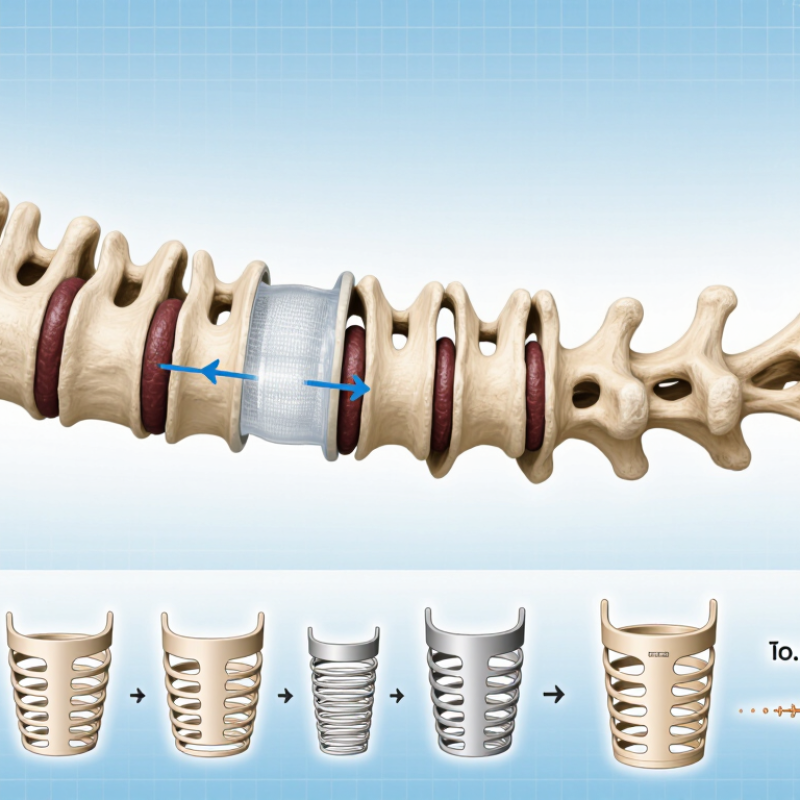
What Anterior Interbody Cervical Fusion Cages Are
An anterior interbody cervical fusion cage is a small implant placed between two neck vertebrae during anterior cervical discectomy and fusion (ACDF). The surgeon reaches the spine through the front of the neck, removes the damaged disc, and inserts the cage into the cleared space. It helps maintain disc height and provides a place for bone graft material. The goal is for the neighboring vertebrae to grow together over time. A cage is not a replacement disc. It is designed to support fusion and limit motion at that level.
Cages may be made from materials such as titanium or radiolucent polymer, and their shape and surface features vary. They are selected to fit the patient’s anatomy and the surgical plan; one design does not suit every case. A 2023 systematic review in the Journal of Clinical Medicine reported fusion rates above 90% across many ACDF studies, while noting that outcomes vary with patient factors and study methods. That figure describes study results, not a personal guarantee. The North American Spine Society’s evidence-based guidance also emphasizes matching surgery to symptoms, imaging, and examination findings. Small details matter: cage position, bone quality, and graft choice can all affect healing. The evidence is useful, but it is not perfect.
| Dimension | What It Means | Practical Consideration |
|---|---|---|
| Definition | An anterior cervical interbody fusion cage is an implant placed in the disc space between two neck vertebrae during an anterior cervical discectomy and fusion (ACDF). | It is one component of a fusion procedure; the specific implant and surgical plan depend on the patient’s anatomy and clinical needs. |
| Surgical approach | “Anterior” means the surgeon reaches the cervical spine through the front of the neck, working around the throat structures to access the disc. | The approach provides access to the front of the disc space. As with any surgery, it has procedure-specific risks that should be discussed with the treating surgeon. |
| Main purpose | After the damaged disc is removed, the cage helps maintain space between the vertebrae and provides a structure in which bone fusion can develop. | The cage does not itself guarantee fusion. Bone healing takes time, and outcomes vary among individuals. |
| Materials | Cages may be made from materials such as polyetheretherketone (PEEK), titanium, or porous titanium. Some designs are made from other implant-grade materials. | Material properties differ, including how the implant appears on imaging. Material choice is made by the clinical team based on the case and the available options. |
| Bone graft | A cage may be used with bone graft material placed inside or around it. Graft sources can include the patient’s own bone, donor bone, or processed graft substitutes. | Graft selection and placement are part of the surgical plan; the cage and graft have distinct roles in supporting fusion. |
| Stability and fixation | Some cages rely on their fit and surface features, while others have integrated fixation features. A separate plate and screws may also be used. | Fixation strategy depends on factors such as the number of levels treated, bone quality, anatomy, and surgeon judgment. |
| Levels treated | ACDF may be performed at one or more cervical disc levels, depending on the location and extent of the condition. | More treated levels can change the procedure and recovery considerations. The appropriate number of levels is determined by a qualified spine surgeon. |
| Potential benefits | For appropriately selected patients, ACDF can remove disc material or bone that is compressing neural structures and stabilize the treated segment. | Potential symptom improvement is not assured. Results depend on the diagnosis, overall health, and other patient-specific factors. |
| Possible risks | Potential risks of cervical fusion surgery include infection, bleeding, swallowing or voice symptoms, nerve or spinal cord injury, nonunion, and problems involving the implant or adjacent spinal levels. | Risks differ by patient and procedure. A surgeon can explain which risks are most relevant before treatment. |
| Follow-up and healing | Follow-up visits and imaging may be used to assess healing, alignment, and implant position. Bone fusion develops over time. | Activity guidance and recovery timelines vary. Patients should follow their care team’s instructions and report new or worsening symptoms. |
| Choosing an implant | Cage design is considered alongside the patient’s anatomy, bone quality, diagnosis, surgical goals, and the surgeon’s experience. | No single cage design is appropriate for every patient. Implant decisions should be made by the treating spine surgeon, with the patient informed about alternatives and risks. |
FAQS
It sits between neighboring vertebrae after the damaged disc is removed. It helps preserve the space and holds bone graft material while fusion develops.
No. A cage provides structural support, but it cannot guarantee fusion or symptom relief. Healing takes time.
The surgeon considers symptoms, imaging, nerve compression, alignment, instability, bone quality, and health history. One scan rarely tells the whole story.
A poorly fitted cage may not provide the intended support. The treated level and the patient’s anatomy guide sizing and placement. Small differences matter.
Some patients experience swallowing discomfort or voice changes. Infection and problems with fusion are also possible. The balance can be hard to judge.
No. The decision depends on the individual case, and some patients may have alternatives. Ask what findings support the proposed plan.
They use follow-up imaging and clinical assessments to review healing and alignment. Results vary, and progress may feel slow.
An older U.S. inpatient-data analysis reported a 206% increase from 1998 to 2008. That shows procedure growth, not proof that cages improve outcomes.
Ask why a cage may suit your case, what alternatives exist, and how recovery could affect work or daily tasks. Bring your medication list and mention past neck surgery. If the explanation feels rushed, ask again.
Conclusion
Anterior Interbody Cervical Fusion Cages are implants placed between cervical vertebrae during an anterior fusion procedure. They help maintain space between the bones and provide structural support while the vertebrae heal together. Their role is considered alongside the overall surgical plan, the condition being treated, and the patient’s individual anatomy and health.
Surgeons may consider an interbody cage when cervical fusion is appropriate, while cage shape, size, and material can influence how it fits and supports the intended fusion. The choice is not suitable for every patient, and potential risks, alternative approaches, and patient-specific factors should be discussed with a qualified clinician. Understanding these considerations can help explain why a cage may be selected as part of cervical fusion care.