
Orthopedic Surgical Insights & Innovations
Exploring clinical developments, advanced implant technologies, trauma fixation solutions, and news from the global orthopedic community.
China Top Periprosthetic Cable Plate Systems Suppliers
Table of Contents
- What Periprosthetic Cable Plate Systems Are and How They Work
- Key Components and Design Features of Cable Plate Systems
- Common Orthopedic Applications and Patient Considerations
- China’s Periprosthetic Cable Plate Supplier Landscape
- How to Evaluate Suppliers, Quality Standards, and Product Support
- FAQS
- Conclusion
- Related Posts
China’s orthopaedic manufacturing sector is attracting attention as hospitals and distributors seek reliable fixation options for complex revision cases. Periprosthetic Cable Plate Systems combine a contoured plate with cables that can secure fragments around an existing implant, where ordinary screw placement may be limited. Small design details matter: plate-hole spacing, cable-slot geometry, alloy choice, and instrument handling can affect fit and workflow.
The clinical need is real, but estimates vary. Reviews published in EFORT Open Reviews report periprosthetic femoral fracture rates ranging from 0.1% to 4% after primary hip replacement and 0.8% to 13% after revision surgery. These broad ranges reflect differences in patient groups, implants, and follow-up; they should not be treated as a forecast for any one hospital. The National Joint Registry’s 21st Annual Report (2024) also documents substantial joint-replacement activity across the UK, underscoring the importance of dependable revision-care pathways. It does not, however, rank cable-plate suppliers.
This guide examines China-based suppliers through practical criteria: manufacturing capability, material and process controls, product documentation, instrument compatibility, and evidence supporting clinical use. Buyers should verify claims directly and review applicable quality records, not rely on catalogue images alone. A polished plate is not enough. Supplier comparisons also have limits: public information may be incomplete, and product performance depends on surgical technique and case selection. The aim here is a careful starting point, not a clinical endorsement.
What Periprosthetic Cable Plate Systems Are and How They Work
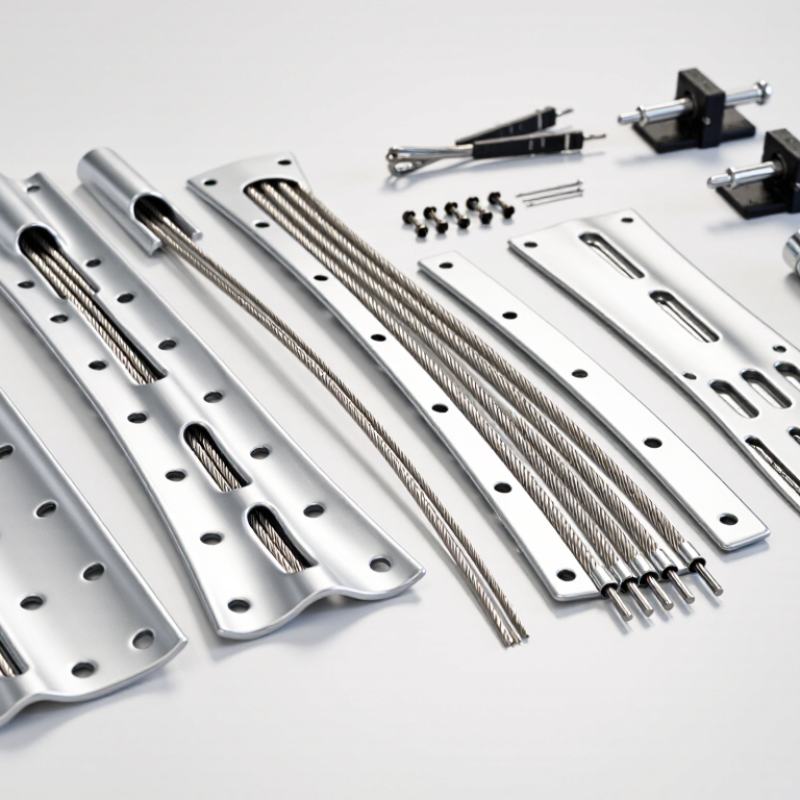
Periprosthetic cable plate systems help stabilize fractures that occur near an existing joint implant. They usually combine a contoured metal plate, bone screws, and flexible cables. The plate sits along the bone, while cables loop around it where an implant stem or limited bone space may make screw placement difficult. A tensioning tool tightens each cable against the bone. The plate then helps maintain alignment as healing progresses.
In practice, surgeons assess fracture pattern, implant stability, and bone quality before choosing a fixation plan. Imaging helps show where the plate can sit and whether screws might interfere with the prosthesis. Small details matter. A cable that is too loose may allow movement; excessive tension can place unwanted pressure on fragile bone. The system is not a substitute for sound surgical judgment, and it cannot guarantee union. Cable position and plate fit also deserve careful review during surgery. A neat construct is reassuring, but it does not remove every uncertainty. Recovery and follow-up depend on the individual injury, the implant, and the patient’s health.
Key Components and Design Features of Cable Plate Systems
A periprosthetic cable plate system combines a contoured metal plate, cerclage cables, cable guides, and screws. The plate sits along the bone, while cables wrap around areas where a standard screw path may be limited by an existing implant. This arrangement can help stabilize selected fractures, but suitability depends on fracture location, bone quality, and the treating surgeon’s plan.
Design details matter. Plate holes should support practical screw placement, and cable slots should guide the cable without sharp edges or awkward turns. A dedicated tensioning instrument helps apply controlled force; excessive tension may damage bone or compromise fixation. Small details count. Clear markings and smooth cable pathways can make handling easier in a crowded operative field. Materials and surface finishes also need consistent inspection, since tiny defects can affect fit or handling.
When assessing suppliers in China, buyers can review dimensional checks, material documentation, production traceability, and consistency between samples and finished batches. These records do not replace clinical evaluation. Nor does a polished drawing prove that a system works well in every case. I would also ask how the supplier manages design changes; this point is easy to overlook, yet it can create confusion during procurement.
| System Component | Primary Function | Common Design Features | Selection and Use Considerations |
|---|---|---|---|
| Periprosthetic plate | Provides longitudinal support and fixation for fractures around joint implants, commonly in the femur. | May include elongated holes, locking-screw holes, cable slots, or a combination of these features. Contoured or contourable designs are used to accommodate bone anatomy. | Plate length, curvature, hole layout, and compatibility with the existing implant and fixation options should be assessed for the individual fracture. |
| Cerclage cable | Encircles the bone to provide circumferential fixation, including where a prosthetic stem limits access for conventional screws. | Typically made from metallic cable strands. Cable diameter, construction, and available lengths vary by system. | Choose only a cable compatible with the plate and its locking or tensioning mechanism. Avoid excessive tightening, which can compromise bone or cable integrity. |
| Cable locking feature | Secures the cable to the plate or maintains cable tension after placement. | Depending on the system, the cable may engage a plate slot, clamp, crimp, or dedicated locking element. | Locking methods are system-specific. Follow the applicable instructions for use and confirm that the cable is seated and retained as intended. |
| Screw fixation | Anchors the plate to available bone and can supplement cable fixation. | Plate designs may accommodate locking screws, non-locking screws, or both. Screw trajectories and lengths depend on the plate and anatomy. | Plan screw placement around the prosthetic stem, existing hardware, fracture pattern, and available bone stock. Not every plate hole is suitable for every screw type. |
| Cable tensioner | Applies controlled tension to a cable before it is locked or crimped. | Usually a dedicated instrument designed for a particular cable and locking interface; tensioning mechanisms differ among systems. | Use the compatible instrument and the technique specified by the manufacturer. Do not assume tension settings or instruments are interchangeable. |
| Cable passer | Guides the cable around the bone while helping limit disruption to surrounding soft tissues. | May have a curved or flexible profile to assist passage around the bone and beneath soft tissues. | Careful passage and protection of nearby structures are important. The approach should account for local anatomy and the surgical plan. |
| Plate material and finish | Provides structural support while meeting the system’s material and manufacturing requirements. | Orthopedic plates are commonly manufactured from implant-grade titanium alloys or stainless steels, depending on the device design. | Confirm the material, intended use, and compatibility information in the device documentation; material options are not identical across systems. |
| Modular fixation strategy | Combines plate, cable, and screw fixation to address different bone regions and fixation constraints. | Some constructs allow cables and screws to be used together, providing options when a stem or fracture location restricts screw placement. | Construct design depends on fracture configuration, bone quality, implant stability, and available fixation points. Clinical decisions belong to the treating surgical team. |
Design details, materials, dimensions, and instrument compatibility vary by system. Verify current product documentation and applicable regulatory information before selection or use.
Common Orthopedic Applications and Patient Considerations
Periprosthetic cable plate systems may help stabilize fractures near an existing hip or knee replacement. They are often considered when a fracture lies around a femoral stem, where ordinary screws may be difficult to place. The plate supports the bone, while cables can secure it around the prosthesis. Fit matters. Treatment depends on fracture pattern, implant stability, and the patient’s bone quality.
A surgeon also considers soft-tissue condition, pain, mobility, and other health problems. Imaging helps assess whether the existing implant is loose and how the fracture may be fixed. Cable placement and tension require care; excessive pressure may affect surrounding tissue. These systems do not suit every fracture, and recovery can vary. There is no perfect construct. The trade-offs deserve discussion, especially when bone is fragile or the patient has limited mobility.
Tips: Ask how stable the existing implant appears and what weight-bearing limits may apply after surgery. Discuss pain control, wound checks, and a realistic rehabilitation plan. Follow-up imaging matters, even when early recovery feels smooth.
China’s Periprosthetic Cable Plate Supplier Landscape
China’s supplier landscape includes manufacturers focused on orthopedic implants, contract producers, and trading companies. Their capabilities can differ widely. Some provide in-house machining and surface finishing, while others rely on external partners. Buyers should compare more than catalog dimensions. Ask how plate geometry, cable slots, and locking features are checked during production. Request material certificates, inspection records, and details about batch traceability. A polished brochure is useful, but it is not proof of consistent quality. Production capacity and communication also matter when timelines are tight.
Tips: Request drawings and sample documentation. Confirm that cable sizes and plate configurations match your intended system. Ask how suppliers handle design changes and nonconforming parts. Keep questions specific.
A careful supplier review may include a video tour or an independent quality audit, where appropriate. Discuss sterilization responsibilities, packaging specifications, and shipping conditions before placing an order. Clarify which tests are performed in-house and which are outsourced. Check that technical files are complete and current. One detail is easy to miss: a sample can fit well, yet production tolerances may vary between batches. Ask for acceptance criteria and recent inspection examples. Supplier comparisons are rarely tidy; documentation may arrive in different formats, and responses can be uneven. That uncertainty deserves attention, not guesswork.
How to Evaluate Suppliers, Quality Standards, and Product Support
Choosing a supplier for periprosthetic cable plate systems takes more than comparing catalog prices. Check plate lengths, cable diameters, fixation options, and the instruments supplied with each system. Ask for material specifications, batch traceability, and inspection records. Small details matter. A smooth cable eyelet and a well-fitting tensioning tool can make handling more predictable.
Review the supplier’s quality-system documentation, including current ISO 13485 certification where applicable. This certifies a quality-management system, not the performance of every product. Request product-specific mechanical test reports, such as fatigue or strength testing, and confirm how changes are controlled. If products arrive sterile, ask about sterilization validation, packaging integrity, and shelf-life evidence. Verify registrations for the markets where the system will be used.
Product support deserves equal attention. Ask whether instrument sets, replacement parts, and clear instructions are consistently available. Check how quickly technical questions and complaints receive a documented response. A polished brochure is not proof. No checklist removes every uncertainty, and supplier answers may leave gaps; record those gaps and request evidence before making a decision.
China Top Periprosthetic Cable Plate Systems Suppliers — How to Evaluate Suppliers, Quality Standards, and Product Support
The bars show the year in each document’s designation, not a supplier score or product approval. Use these references as a starting point: verify applicable certifications and product-specific test evidence, and assess traceability, instructions for use, training, and post-market support. ASTM F382 addresses metallic bone plates and does not, by itself, establish requirements for every cable component or complete system.
FAQS
It combines a contoured metal plate, bone screws, and flexible cables. The plate rests along the bone. Cables loop around areas where an existing implant limits screw placement.
A tensioning tool tightens each cable against the bone. The plate helps maintain alignment during healing. Small details matter.
Surgeons assess the fracture pattern, implant stability, and bone quality. Imaging helps show possible plate positions and screw paths. One plan will not fit every case.
A loose cable may allow movement. Too much tension can put unwanted pressure on fragile bone. The right balance can be difficult to judge.
Review plate lengths, hole positions, cable guides, and cable pathways. Smooth eyelets and practical cable slots can make handling easier. Not always.
Ask for material specifications, batch traceability, dimensional checks, and inspection records. Compare samples with finished batches. A polished drawing proves little.
Review quality-system documents, including current ISO 13485 certification where applicable. Request product-specific strength or fatigue reports. Certification alone does not prove every product’s performance.
Ask for sterilization validation, packaging integrity, and shelf-life evidence. Check instrument availability, replacement parts, instructions, and documented responses to questions. Some gaps may remain; record them.
Conclusion
Periprosthetic Cable Plate Systems are orthopedic fixation devices used to stabilize fractures that occur around joint implants. They combine a contoured plate with cables, screws, or other fixation elements to secure bone fragments while accommodating the presence of an existing prosthesis. Their design may include options for cable routing, screw placement, and plate positioning, helping surgeons adapt fixation to different fracture patterns and anatomical needs.
These systems may be considered in cases involving fractures around hip or knee implants, with selection guided by bone quality, implant stability, fracture location, and the patient’s overall condition. China’s supplier landscape includes manufacturers and distributors offering different configurations and levels of technical support. When evaluating suppliers, buyers should review material and manufacturing information, quality management practices, product documentation, availability of compatible components, and after-sales support. Careful assessment helps ensure that a system is appropriate for its intended clinical use and the needs of the treating team.

Blog Tags: