
Madison Ortho Knowledge Center

Orthopedic Surgical Insights & Innovations

Exploring clinical developments, advanced implant technologies, trauma fixation solutions, and news from the global orthopedic community.

0%

Choosing among China’s leading External Fixator Systems suppliers takes more than comparing product photos or catalog prices. These systems support fracture stabilization, limb reconstruction, and complex orthopedic procedures. Their design details matter: pin configuration, frame adjustability, material finish, and compatibility with clinical workflows can affect practical use.

Gavriil Ilizarov, the orthopedic surgeon associated with the Ilizarov method, is often credited with saying, “The only limit to the method is the imagination of the surgeon.” Versions of this quotation vary, so readers should treat its wording cautiously. Its central idea still fits: thoughtful design matters, but sound clinical judgment matters more.

This overview examines ten Chinese suppliers through practical questions: What product ranges do they offer? Can they provide clear technical documentation, quality-system evidence, and responsive after-sales support? Do they explain intended use and training needs without relying on vague promises? These checks help buyers build a shortlist, not a definitive ranking. A polished catalog is not proof. Supplier claims should be checked against current records, product specifications, and the requirements of the intended market. Details may differ between models, and public information can be incomplete. That is worth acknowledging. A careful comparison can reveal useful options, but final decisions belong with qualified clinical and procurement teams.
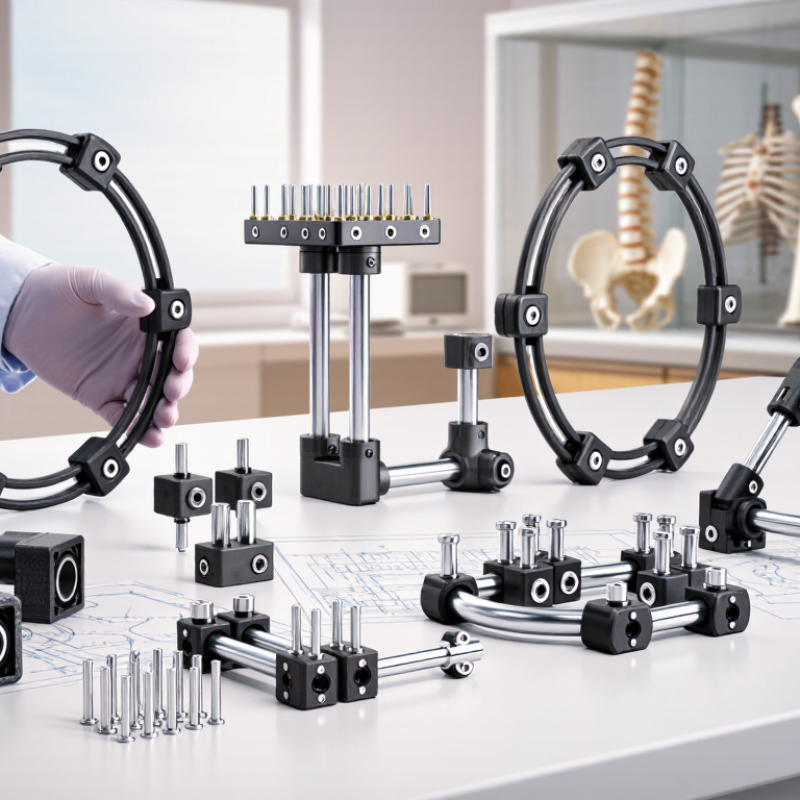
China Top 10 External Fixator Systems Suppliers?

What Are External Fixator Systems and How Do They Work?

External fixator systems are temporary or long-term orthopedic devices that stabilize fractured bones from outside the body. They use threaded pins or tensioned wires, connected to rods, rings, and adjustable clamps. The frame stays outside. This arrangement transfers mechanical load around the injured area while preserving access to damaged skin and muscle.

During application, a surgeon places pins into healthy bone above and below the fracture. The connecting frame holds alignment while new bone and soft tissue develop. Circular frames can provide controlled compression or gradual correction. Monolateral frames are often lighter and easier to adjust. In practice, pin position matters greatly. Poor placement can irritate nerves, restrict movement, or create infection risks. That detail matters.

The World Health Organization reported about 20–50 million nonfatal road injuries annually, many causing disability and complex fractures. Such trauma helps explain the continuing clinical demand for external fixation. Grand View Research estimated the global external fixators market at approximately US$1.1 billion in 2023, with growth near 6% annually through 2030. Market estimates vary by definition and region, so they should not replace clinical evidence. A 2023 systematic review in orthopedic trauma literature also emphasizes careful pin-site monitoring and patient education. Daily cleaning sounds simple, yet real-world adherence is inconsistent. External fixation works mechanically, but outcomes still depend on surgical planning, rehabilitation, and attentive follow-up.

How to Evaluate China’s External Fixator System Suppliers

Evaluating China’s external fixator system suppliers requires more than comparing catalog prices. Start with the intended use: a tibial fracture frame needs different configuration options from a small-bone system. Ask for drawings, material specifications, pin compatibility, adjustment ranges, and clear instructions for assembly. Request evidence that representative products have undergone mechanical testing, including checks for connection stability and load performance. A polished catalog is not proof. Review quality-system documentation, batch traceability, sterilization information where applicable, and procedures for handling complaints or design changes. These details matter when a clamp must stay secure after repeated adjustments.

Clinical context also helps assess a supplier’s claims. The World Health Organization’s Global Status Report on Road Safety 2023 estimates that road crashes cause about 1.19 million deaths each year, with millions more people injured. That burden does not establish demand for any particular device, but it underscores why trauma products need dependable documentation and support. Check whether the supplier can provide consistent production records, sample units, and technical responses within a defined timeframe. Ask how it manages replacement parts and changes between production batches. If possible, have qualified clinicians and biomedical engineers review samples together. One weak point is easy to miss: attractive machining may hide awkward pin access or difficult cleaning. A factory visit can help, but it cannot replace independent testing and careful document review.

Profiles of China’s Top 10 External Fixator System Suppliers

China’s external-fixator suppliers differ in engineering focus, production scale, and clinical support. Without current factory audits and verified sales data, a definitive top-ten ranking would be misleading. These ten profiles describe supplier capabilities to investigate, not confirmed company rankings.

Supplier one focuses on modular frames for adjustable configurations. Supplier two emphasizes lightweight components and clear assembly instructions. Supplier three offers circular systems suited to complex fixation plans. Supplier four concentrates on limb-lengthening hardware and precise adjustment mechanisms. Supplier five supports private-label production, though buyers should inspect quality records closely.

Supplier six highlights machining consistency across pins, clamps, and rods. Supplier seven provides a broad catalogue for hospitals and distributors. Supplier eight emphasizes export documentation and responsive service. Supplier nine offers custom engineering, but lead times may vary. Supplier ten focuses on cost-conscious standard systems. Small details matter: check material certificates, packaging, traceability, and sample fit. Ask how suppliers manage dimensional checks and complaints. A polished catalogue is not proof of dependable performance. Request current documentation and evaluate products with qualified clinical and procurement teams.

Product, Quality, Certification, and Manufacturing Comparisons

China’s top ten external fixator system suppliers should be compared beyond catalog size and quoted prices.
Product evaluation begins with clinical fit. Review unilateral, circular, and hybrid frames, along with compatible pins, wires, clamps, and adjustment tools. Check whether components support stable fixation, precise alignment, and efficient operating-room handling. Small details matter. A difficult locking knob can slow a procedure.

Quality evidence should include material specifications, dimensional inspection, fatigue testing, corrosion resistance, and surface-finish controls. Stainless steel and titanium may serve different clinical and mechanical needs. Ask for batch traceability and nonconformance records. A polished brochure is not proof. Factory audits can reveal inconsistent machining, weak packaging, or incomplete inspection reports. No factory is flawless, but repeated unexplained deviations deserve attention.

Certification comparisons require careful reading. An ISO 13485 certificate indicates a medical-device quality system, not automatic product approval everywhere. Verify applicable registration, technical documentation, risk management, and sterilization validation for the target market. Manufacturing capability also matters. Examine CNC equipment, calibrated measurement tools, clean assembly areas, and final-release procedures. Request sample units before large orders. Test thread engagement, clamp movement, and fit between mating parts. Supplier communication is part of reliability, although it is often overlooked. Some evaluation methods remain imperfect, especially when public data is limited. That limitation should be recorded, not hidden.

How to Choose the Right Chinese External Fixator Supplier

Choosing among China’s top external fixator system suppliers requires more than comparing prices. The WHO Global Atlas of Medical Devices 2022 identifies over two million medical device types worldwide. That scale makes supplier verification essential. Request ISO 13485 certification, product registration documents, mechanical test reports, and batch traceability records. Certification supports quality management, but it does not guarantee clinical performance.

Review the fixator’s material, pin compatibility, locking strength, and adjustment accuracy. Ask for fatigue testing under realistic loading conditions. A reliable supplier should provide clear instructions, sterilization data, packaging validation, and complaint-response procedures. Check whether engineers support surgeon training and operating-room questions. Delivery history also matters. One delayed component can interrupt a trauma procedure. Low prices attract attention, yet weak after-sales support may create higher clinical and inventory costs. This is often underestimated.

Tips: Compare at least three suppliers using the same checklist. Request sample units and inspect threads, clamps, markings, and packaging. Confirm local regulatory acceptance before purchasing. Read independent clinical studies, not only supplier brochures. Ask for recent nonconformity records when possible. Perfect documentation is uncommon; missing answers deserve careful reflection. A factory tour can help, but it cannot replace audited records, product testing, and consistent post-market monitoring.

FAQS

What is an external fixator system?

It is an orthopedic frame that stabilizes a fractured bone outside the body. Pins or wires connect the bone to rods, rings, and clamps. The frame remains visible and adjustable.

How does an external fixator support bone healing?

Surgeons place pins into healthy bone above and below the fracture. The frame maintains alignment while bone and soft tissue develop. It also transfers loads around the injured area.

What are the main types of external fixator frames?

Circular frames use rings and tensioned wires for compression or gradual correction. Monolateral frames usually weigh less and allow easier adjustments. The best choice depends on the fracture and patient.

Why is pin placement so important?

Incorrect placement may irritate nerves, limit movement, or increase infection risks. Pin position also affects stability and daily comfort. Small technical details matter greatly.

What should patients monitor during external fixation?

They should follow cleaning instructions and observe each pin site carefully. Redness, swelling, drainage, increasing pain, or fever needs clinical attention. Daily care sounds simple, but adherence can be inconsistent.

How can buyers evaluate an external fixator supplier?

Request quality certifications, registration documents, mechanical test reports, and batch traceability records. Review materials, pin compatibility, clamp strength, and adjustment accuracy. Documentation helps, but it cannot prove every clinical result.

What supplier testing and support should be requested?

Ask for fatigue testing under realistic loads, sterilization data, and packaging validation. Confirm clear instructions and complaint-response procedures. Engineer support for training and operating-room questions is valuable.

How should different suppliers be compared?

Compare at least three suppliers using the same checklist. Inspect sample threads, clamps, markings, and packaging. Check delivery history and post-market monitoring records. Low prices may hide later costs.

Can a factory visit replace independent verification?

No. A factory visit offers useful observations, but audited records and product testing remain necessary. Independent clinical evidence deserves more weight than promotional brochures. No checklist is perfect.

Conclusion

This article provides a practical overview of External Fixator Systems, explaining how frames, pins, wires, clamps, and adjustment mechanisms support bone stabilization, alignment, and controlled healing. It also outlines the key factors for evaluating Chinese suppliers, including engineering capability, material selection, product range, quality management, certification, manufacturing capacity, customization services, delivery reliability, and technical support.

The article then presents a structured comparison of ten leading types of Chinese suppliers without focusing on brand promotion, highlighting differences in product design, quality controls, certifications, production processes, and international service capabilities. Finally, it offers a clear supplier-selection framework to help hospitals, distributors, and medical procurement teams assess compatibility with clinical requirements, regulatory expectations, budget considerations, and long-term cooperation goals. By using these criteria, buyers can make more informed decisions and identify a dependable supplier capable of providing safe, consistent, and professionally supported external fixation solutions.

Emma

Emma

Emma is a dedicated marketing professional with a profound expertise in our company’s products and services. With years of experience in the field, she consistently contributes valuable insights and content to our professional blog, ensuring that our audience is well-informed about the latest......