
Orthopedic Surgical Insights & Innovations
Exploring clinical developments, advanced implant technologies, trauma fixation solutions, and news from the global orthopedic community.
Arthroscopy Sports Medicine Implants are becoming essential tools in minimally invasive orthopedic care. They support ligament reconstruction, meniscal repair, cartilage treatment, and shoulder stabilization. The World Health Organization estimates that approximately 1.71 billion people live with musculoskeletal conditions worldwide. That burden continues to increase demand for reliable surgical solutions.
Market definitions vary. This matters. Grand View Research reports sustained growth in the global arthroscopy instruments market, driven by sports injuries, aging populations, and less invasive procedures. Fortune Business Insights also identifies sports medicine as a growing healthcare segment, supported by improved implant materials and rising outpatient surgery. However, these reports often group implants, instruments, and related services differently. Direct comparisons can therefore mislead global buyers.
This Top 10 selection focuses on practical implant categories, including suture anchors, interference screws, fixation buttons, and meniscal repair systems. Each product should be assessed through clinical indication, material behavior, fixation strength, imaging compatibility, and sterilization requirements. Regulatory clearance is equally important. Buyers should verify documentation from recognized authorities, such as the U.S. FDA, European notified bodies, or applicable national regulators.
Small details matter.
A titanium button may offer strong cortical fixation, while a bioabsorbable screw may reduce long-term metal-related concerns. Neither option suits every patient or surgical technique. Surgeon training, distributor support, traceability, and post-market surveillance also influence real-world value. The ranking is not universal. It is a structured starting point, and purchasing teams should review current evidence, local regulations, and hospital protocols before making final decisions.
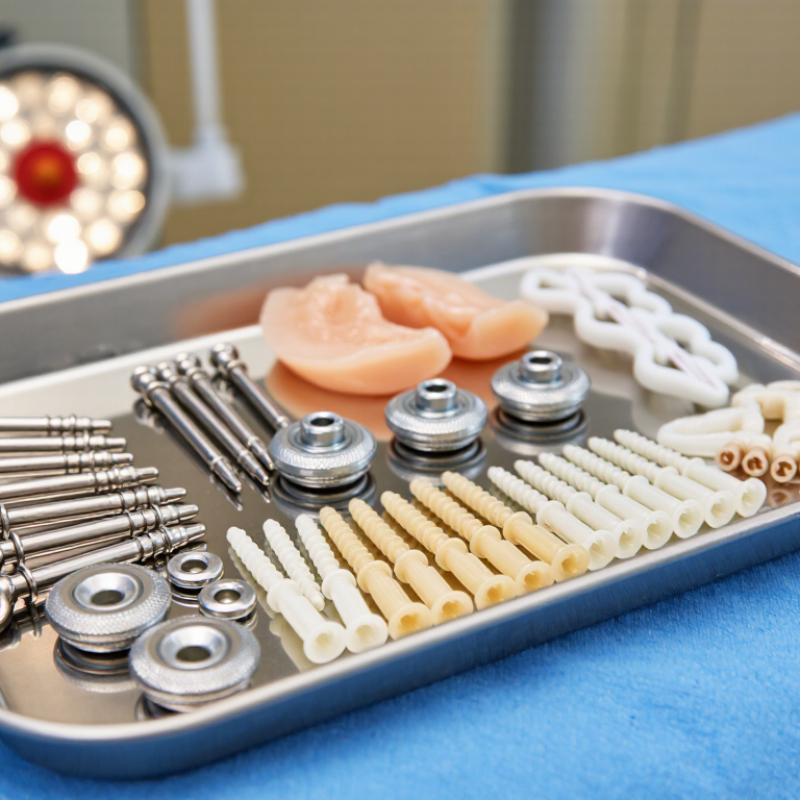
Definition and Role of Arthroscopy Sports Medicine Implants
Top 10 Arthroscopy Sports Medicine Implants for Global Buyers
Arthroscopy sports medicine implants are specialized devices used during minimally invasive joint procedures. Surgeons place them through small portals using a camera and narrow instruments. Common categories include suture anchors, interference screws, fixation buttons, and meniscal repair devices. Their main role is securing repaired tissue or reconstructed ligaments while healing develops. Proper fixation can support stability, movement, and rehabilitation. It cannot replace surgical judgment.
Implant selection depends on anatomy, bone quality, tissue strength, and the planned technique. Materials may include absorbable polymers, metal alloys, or advanced composites. Each option has practical benefits and limitations. A strong implant is not automatically the best choice. Patient factors can change the outcome. Global buyers should examine product specifications, sterilization information, traceability, and applicable regulatory documents. Requirements vary between countries. A low purchase price may hide training, storage, or compliance costs. Catalog rankings also need careful review; laboratory claims do not always predict clinical performance.
Tips: Confirm the intended joint and procedure. Check dimensions, insertion tools, and packaging integrity. Request clear evidence for biocompatibility and sterilization. Compare supplier support, not only unit price. Ask whether replacement instruments are available locally. Small details matter. Even experienced teams can overlook them.
Top 10 Arthroscopy Sports Medicine Implants for Global Buyers - Definition and Role of Arthroscopy Sports Medicine Implants
Arthroscopy sports medicine implants are small medical devices inserted through arthroscopic portals to repair, stabilize, reconstruct, or reinforce damaged soft tissue and bone structures. Their selection depends on anatomy, injury pattern, fixation strength, material properties, surgical technique, and patient-specific factors.
| Rank | Implant Type | Definition and Primary Role | Common Arthroscopic Applications | Typical Materials | Fixation or Deployment Method | Key Buying Considerations |
|---|---|---|---|---|---|---|
| 1 | Suture Anchors | Small implants that secure sutures to bone, allowing detached or torn soft tissue to be reattached and stabilized during healing. | Rotator cuff repair, labral repair, Bankart repair, capsular stabilization, and selected foot or ankle ligament procedures. | PEEK, bioabsorbable polymers, titanium, stainless steel, and high-strength polyethylene sutures. | Threaded, press-fit, or all-suture insertion into a prepared bone tunnel or pilot hole. | Anchor diameter, pull-out strength, insertion profile, suture configuration, imaging compatibility, and absorption profile. |
| 2 | Interference Screws | Cylindrical or tapered screws that compress a tendon or ligament graft against the wall of a bone tunnel. | Anterior cruciate ligament and posterior cruciate ligament reconstruction, as well as selected knee and ankle ligament procedures. | Titanium, stainless steel, PEEK, and bioabsorbable polymers such as PLLA or PLGA-based materials. | Screw insertion inside the bone tunnel to wedge the graft securely against the tunnel wall. | Thread design, torque resistance, graft compatibility, degradation behavior, tunnel dimensions, and revision considerations. |
| 3 | Cortical Buttons | Low-profile fixation devices that sit on the outer cortex of bone and suspend a tendon or ligament graft through a drilled tunnel. | Soft-tissue ACL reconstruction, hamstring graft fixation, and selected shoulder or ankle ligament reconstructions. | Titanium, stainless steel, PEEK, and high-strength braided suture materials. | Button deployment across the far cortex, usually connected to the graft by adjustable or fixed-length sutures. | Button size, tunnel compatibility, resistance to migration, suture adjustability, and ease of intraoperative verification. |
| 4 | Meniscal Repair Devices | Implants designed to approximate and hold torn meniscal tissue while limiting the risk of cartilage or neurovascular injury. | Vertical, horizontal, and bucket-handle meniscal tears suitable for repair. | Bioabsorbable polymers, PEEK, and high-strength suture materials. | All-inside delivery through a needle or cannula, with anchors, darts, arrows, or suture-based fixation. | Implant profile, deployment control, tissue capture depth, absorption characteristics, and protection of the popliteal neurovascular structures. |
| 5 | Suture Tape and Internal Brace Implants | Broad, high-strength tape systems that reinforce repaired or reconstructed ligaments and provide temporary load sharing during biological healing. | Ankle lateral ligament repair, knee collateral ligament repair, ACL augmentation, and selected shoulder stabilization procedures. | Ultra-high-molecular-weight polyethylene or polyester-based braided tape, used with anchors or buttons. | Tape is secured to bone with suture anchors, buttons, or screws while avoiding excessive tension on the repaired tissue. | Tape width, abrasion resistance, knotless or knotted fixation, tension control, and compatibility with the repair technique. |
| 6 | Knotless Anchors | Suture anchors with an integrated locking mechanism that secures soft tissue without requiring arthroscopic knot tying. | Shoulder labral repair, rotator cuff repair, capsular plication, and selected hip or ankle soft-tissue repairs. | PEEK, titanium, and bioabsorbable polymers with high-strength sutures or tape. | Threaded or press-fit anchor insertion followed by tensioning and locking of the suture within the anchor body. | Tension adjustment, locking reliability, insertion torque, anchor size, tissue compression, and risk of suture abrasion. |
| 7 | Glenoid and Hip Labral Anchors | Small-diameter anchors developed for reattaching labral tissue around the shoulder glenoid or acetabular rim. | Bankart lesions, superior labral tears, anterior shoulder instability, and hip labral repair. | PEEK, bioabsorbable polymers, titanium, and high-strength sutures. | Small pilot-hole insertion with one or more sutures passed through the labrum and secured by knots or a knotless locking mechanism. | Small footprint, suture control, resistance to migration, compatibility with limited bone stock, and reduced cartilage prominence. |
| 8 | Osteochondral Fixation Implants | Pins, screws, or darts used to stabilize an osteochondral fragment or cartilage repair construct against the subchondral bone. | Focal cartilage defects, osteochondritis dissecans lesions, and selected chondral or osteochondral fragment fixation. | Bioabsorbable polymers, magnesium-based materials, titanium, or other implantable metals depending on the device design. | Press-fit pinning, countersunk screw fixation, or multiple low-profile implants placed flush with the cartilage surface. | Flush placement, compression control, implant visibility, degradation profile, and protection against joint-surface abrasion. |
| 9 | Shoulder Fixation Screws and Staples | Rigid fixation implants used to secure bone-block or tendon-bone procedures and reinforce structural shoulder stabilization. | Coracoid transfer procedures, selected glenoid bone augmentation, and tendon-bone fixation around the shoulder. | Titanium, stainless steel, PEEK, and bioabsorbable polymers. | Transosseous screw, staple, or press-fit fixation depending on graft geometry and bone quality. | Compression strength, profile above the bone surface, corrosion resistance, imaging characteristics, and compatibility with revision surgery. |
| 10 | Biocomposite and Bioabsorbable Fixation Implants | Fixation devices designed to provide initial mechanical support and gradually degrade or integrate, potentially reducing long-term permanent hardware. | Ligament reconstruction, tendon repair, labral repair, and selected cartilage or osteochondral procedures. | PLLA, PLGA, PEEK-based composites, calcium-phosphate reinforced polymers, and other resorbable polymer formulations. | Threaded, press-fit, or suture-based fixation depending on the implant category and target anatomy. | Mechanical retention during healing, degradation rate, inflammatory response, bone integration, radiographic visibility, and storage conditions. |
FAQS
These devices support minimally invasive joint procedures through small portals. Surgeons use them to secure repaired tissue or reconstructed ligaments. Healing still depends on surgical judgment and patient recovery.
Common types include suture anchors, interference screws, fixation buttons, and meniscal repair devices. Each type serves a different fixation purpose. The smallest device is not always the best choice.
Confirm the intended joint, procedure, dimensions, and insertion tools. Consider anatomy, bone quality, tissue strength, and the planned surgical technique. Patient factors can change the outcome.
Materials can include absorbable polymers, metal alloys, and advanced composites. Each material has practical strengths and limitations. Stronger does not automatically mean more suitable.
Review material specifications, dimensional controls, surface finish, and mechanical test results. Check design tolerances and intended-use documents. Laboratory results do not always predict clinical performance.
Check validated sterilization, sealed packaging, shelf-life data, and clear lot numbers. A damaged seal can stop a shipment. Packaging details deserve close inspection.
Requirements differ by country. Verify applicable registrations, technical files, labeling rules, and post-market procedures. Confirm which products each certificate actually covers.
Consider factory audits, sample inspections, complaint handling, and response times. Ask about raw-material changes and subcontracted processes. Test communication with a missing certificate or delayed batch record.
Compare supplier support, training, storage needs, compliance costs, and replacement instrument availability. A low price may hide later expenses. The purchasing process can feel slow.
Treat rankings as starting points, not final evidence. Compare specifications, clinical relevance, documentation, and sample results. No checklist catches everything; teams should revisit their assumptions.
Conclusion
Arthroscopy Sports Medicine Implants are specialized medical devices used to repair, stabilize, or reconstruct damaged joints through minimally invasive procedures. This overview explains their role in improving surgical precision, supporting tissue healing, and helping patients recover from sports-related injuries. It introduces major implant categories, including suture anchors, interference screws, fixation buttons, meniscal repair devices, bioabsorbable implants, and joint-stabilization components. The top ten implant types are compared according to their typical functions, anatomical applications, and suitability for different arthroscopic techniques.
The article also examines the materials and design features that influence implant performance, such as strength, biocompatibility, absorbability, insertion methods, and fixation reliability. Clinical applications across the shoulder, knee, hip, and ankle are discussed to clarify how each device may support specific treatment goals. For global buyers, the evaluation process includes product quality, manufacturing consistency, regulatory compliance, sterilization, traceability, technical documentation, supplier capability, and after-sales support. This framework helps healthcare organizations and distributors make informed, safe, and practical purchasing decisions.