
Madison Ortho Knowledge Center

Orthopedic Surgical Insights & Innovations

Exploring clinical developments, advanced implant technologies, trauma fixation solutions, and news from the global orthopedic community.

0%

Craniomaxillofacial CMF Systems support the repair and reconstruction of facial bones, jaws, and the skull. Their components may include plates, screws, meshes, and patient-specific implants. In the operating room, a few millimeters matter. So do contour, screw placement, and the view available to the surgeon.

This Top 10 overview compares manufacturers by practical factors: product range, material options, design flexibility, published clinical evidence, and technical support. It is not a clinical recommendation or a universal ranking. Availability and regulatory status can differ by market, while a system that fits one procedure may not suit another. That distinction is easy to overlook.

Dr. Peter J. Taub is a craniofacial surgeon and academic specialist. His published clinical work reflects the importance of matching reconstruction choices to patient anatomy and surgical goals. This article presents that principle as a paraphrase, not a direct quotation: select fixation and implant options around the case, rather than treating one system as suitable for every patient. A careful comparison should also ask how manufacturers document performance, support training, and address revisions. Product brochures alone cannot answer every question. That is a limitation worth remembering. The strongest overview is useful, but it should not replace independent clinical judgment or current product documentation.
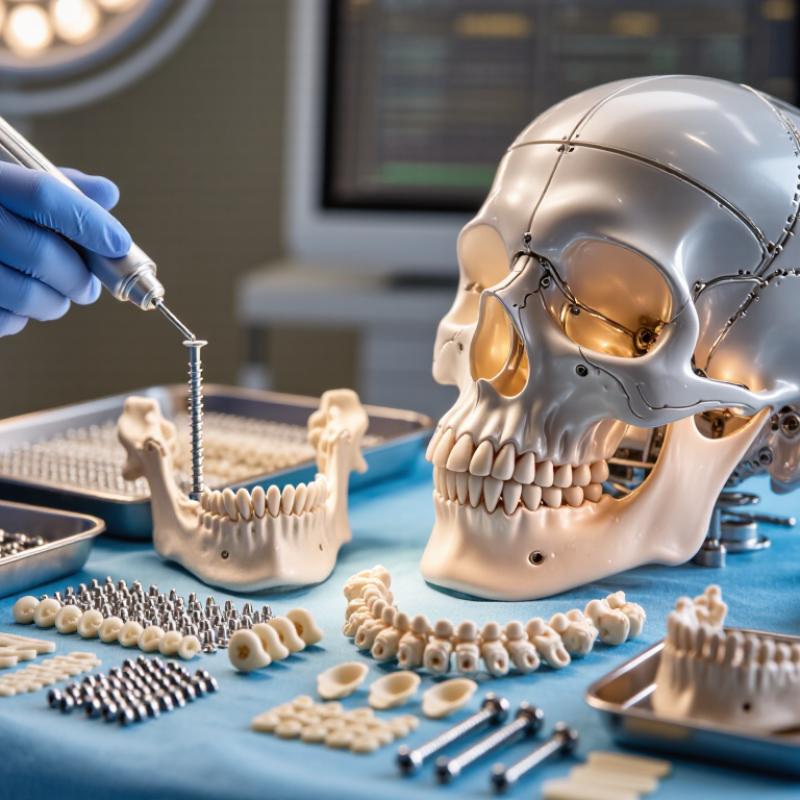
Top 10 Craniomaxillofacial CMF Systems Manufacturers

Definition and Scope of Craniomaxillofacial Systems

Craniomaxillofacial (CMF) systems are collections of implants and instruments used to stabilize or reconstruct bones of the skull and face. Their scope commonly includes plates, screws, mesh, and fixation devices for areas such as the jaw, cheekbones, eye sockets, and cranial vault. Small details matter. A thin plate may fit a curved facial contour, while a stronger construct may be needed where chewing forces are high.

These systems are designed for different anatomical sites and clinical needs, including fracture fixation and reconstruction after bone loss. Some sets include instruments that help surgeons shape implants or position screws. Materials, plate thickness, hole patterns, and compatibility between components can affect handling and fit. “CMF system” is a broad term, though; product ranges and intended uses vary, so the label alone does not explain performance.

The field also covers planning considerations such as bone geometry, soft-tissue coverage, and access during surgery. Imaging and patient-specific models may inform decisions, but they do not replace clinical judgment. Definitions can be a little imperfect: boundaries between CMF, cranial, and dental devices may overlap. Understanding the intended anatomy, components, and use is more useful than relying on a category name alone.

Criteria for Identifying Leading CMF Systems Manufacturers

Leading craniomaxillofacial (CMF) systems manufacturers should be judged by evidence, not presentation alone. Review their documented quality processes, material traceability, and instructions for use. Ask how product changes are controlled and whether technical information is easy to verify. A polished catalogue can still leave practical questions unanswered. Details matter.

Clinical relevance is another key criterion. Look for systems designed around specific anatomical needs, with clearly described plate and screw options and supporting instruments. Consider whether product information explains intended use, limitations, and available clinical evidence. Ask qualified clinicians to assess handling, visibility, and instrument access in realistic workflows. Manufacturer training and responsive technical support can also matter, especially when teams adopt unfamiliar systems. No checklist is perfect; local needs differ, and evidence may not answer every question.

Tips: Request sample documentation, not just sales materials. Compare traceability records, product specifications, and support arrangements side by side. Note unanswered questions, then seek written clarification before making a decision. A small gap in documentation may be fixable, but it should not be ignored.

Top 10 Craniomaxillofacial Systems Manufacturers

A useful comparison of the top 10 craniomaxillofacial systems manufacturers should look beyond product range. These systems support reconstruction and fixation across delicate facial anatomy, where plate contour, screw access, and instrument handling matter. The World Health Organization’s Global Status Report on Road Safety 2023 estimates 1.19 million road deaths each year and 20–50 million non-fatal injuries. These figures describe road trauma broadly, not facial injuries alone, but they underline the need for dependable trauma-care tools.

Compare each manufacturer’s system documentation, material specifications, sterilization instructions, and compatibility between plates, screws, and instruments. Check whether the range addresses common clinical needs, such as mandibular fixation and midface reconstruction. Ask about quality-management certification and available clinical training, too. Small details count. A driver that slips in a narrow operative field can disrupt a carefully planned procedure. Still, a manufacturer checklist cannot replace clinical judgment, and public product information may leave gaps.

Tips: Request current technical files and sample instrument trays before shortlisting suppliers. Confirm the system’s intended use and local availability with qualified clinical and procurement teams. Note any missing evidence rather than assuming it is reassuring. A comparison can look tidy on paper and still overlook real operating-room constraints.

Top 10 Craniomaxillofacial CMF Systems Manufacturers - Top 10 Craniomaxillofacial Systems Manufacturers

This overview summarizes ten common craniomaxillofacial (CMF) system categories, rather than ranking or identifying manufacturers. Materials and configurations vary by product and clinical indication.

No. CMF System Category Typical Clinical Application Common Components or Materials Key System Consideration
1 Cranial Fixation and Reconstruction Fixation of cranial bone flaps and reconstruction of skull defects. Titanium plates, meshes, and screws; patient-specific implants may use materials such as titanium or PEEK. Implant design and fixation are selected to match the defect, anatomy, and surgical plan.
2 Midface Fracture Fixation Stabilization of selected fractures of the maxilla and central midface. Low-profile plates and small-diameter screws, commonly made from titanium. Plate shape and placement depend on fracture pattern and available bone for fixation.
3 Mandibular Trauma Fixation Fixation of mandibular fractures, including fractures of the body, angle, and symphysis. Titanium plates and screws; plate designs range from smaller-profile systems to stronger reconstruction plates. Fixation choice depends on fracture location, stability needs, and the treatment plan.
4 Mandibular Reconstruction Reconstruction after segmental bone loss, including selected trauma or tumor-related defects. Reconstruction plates and screws, usually titanium; fixation may be combined with bone grafting or a vascularized bone flap. Plate contour and fixation points must accommodate the defect and planned reconstruction.
5 Orbital Floor Reconstruction Repair of selected orbital floor or medial wall defects, including some blowout fractures. Contoured titanium mesh, porous polyethylene, or other implant materials, depending on the device. Accurate positioning is important for orbital support and restoration of orbital volume.
6 Zygomaticomaxillary Complex Fixation Stabilization of selected fractures involving the cheekbone and adjacent midface. Titanium plates and screws in configurations suited to the fixation sites. System configuration is guided by fracture displacement and the sites requiring stabilization.
7 Orthognathic Fixation Stabilization of surgically repositioned maxillary or mandibular segments. Plates and screws, commonly titanium; some systems offer plates shaped for specific osteotomies. Fixation is planned around the osteotomy, intended jaw position, and occlusion.
8 Resorbable Fixation Fixation in selected craniofacial procedures, including some pediatric applications. Resorbable polymer plates and screws; composition and absorption characteristics vary by device. Suitability depends on the procedure, required mechanical support, and product instructions.
9 Craniofacial Distraction Systems Gradual movement of bone in selected craniofacial or mandibular procedures. Internal or external distractor devices with fixation components; designs vary by anatomy and movement direction. Distraction vector, activation plan, and device placement are determined for the individual case.
10 Patient-Specific CMF Implants Reconstruction of complex cranial or facial defects using preoperative planning. Custom-designed implants may be manufactured from materials such as titanium or PEEK, depending on the device. Design is based on patient imaging and requires planning, verification, and appropriate regulatory authorization.

Product Portfolios and Technologies Across the Top 10

Across the ten leading craniomaxillofacial systems manufacturers, portfolios commonly cover plates, screws, meshes, and instruments for facial trauma and reconstruction. Many systems use titanium, valued for its strength and compatibility with imaging needs. Low-profile plates can help reduce prominence beneath thin facial tissues. Locking and variable-angle screw designs give surgeons options when bone shape or access is difficult. Small details matter. A plate that bends predictably can be easier to adapt around an orbital rim or jaw contour. Yet catalog breadth alone does not show how easily components work together during surgery.

Technology varies across product lines. Some manufacturers offer resorbable fixation for selected cases, while others provide patient-specific implants or digital planning support. Cutting guides and model-based planning may help translate a surgical plan into practical steps, but accuracy still depends on imaging, fit, and clinical judgment. Instrument design also deserves attention: clear markings, comfortable grips, and controlled drivers can make small operative tasks more manageable. There is room for reflection here. Marketing language may emphasize innovation, while evidence and day-to-day usability are less visible. Comparing material choices, compatible components, and published clinical data gives a more reliable view of what each portfolio actually offers.

Factors to Consider When Comparing CMF Manufacturers

When comparing craniomaxillofacial system manufacturers, look beyond implant price and catalogue breadth. Check whether plates and screws cover the defects your team treats, from thin orbital rims to load-bearing mandibular fractures. Ask for material specifications, fatigue data, and test methods. A polished catalogue can still leave gaps. Request sample trays and assess screw engagement, plate contouring, instrument access, and sterilization instructions in a realistic workflow. Small handling differences matter.

Evidence and traceability deserve equal weight. The World Health Organization’s Global Status Report on Road Safety 2023 estimates 1.19 million road deaths each year and 20–50 million non-fatal injuries. These figures describe trauma broadly, not CMF implant demand, but they underline why dependable supply and clear device records matter. Compare lot traceability, complaint handling, training, and the speed of technical support. Ask how design changes are documented and how field feedback reaches engineering. ISO 13485 certification can indicate a quality-management framework; it does not, by itself, prove clinical performance. Review relevant test reports and published clinical evidence, then check whether the evidence matches your procedures and patient population. One uncomfortable question helps: what happens when a needed component is unavailable? A useful answer should be specific.

Top 10 Craniomaxillofacial (CMF) Systems Manufacturers

Factors to Consider When Comparing CMF Manufacturers

Use these evidence checkpoints to compare CMF manufacturers. Bar values show the number of items in each checklist category—not manufacturer ratings, market data, or rankings.

Verify documentation for the intended device, indication, and market. Requirements and available evidence can vary by product and jurisdiction.

FAQS

What does a craniomaxillofacial system include?

It may include plates, screws, mesh, fixation devices, and instruments for stabilizing or reconstructing skull and facial bones. Details matter.

Which areas can these systems support?

Depending on intended use, they may address the jaw, cheekbones, eye sockets, and cranial vault. Product ranges vary.

What affects how a system fits?

Bone shape, plate thickness, hole patterns, screw access, and soft-tissue coverage can all matter. A curved cheekbone needs careful consideration.

How should teams compare manufacturers?

Review quality processes, material traceability, product specifications, instructions, and support. A polished catalogue is not enough.

Why check compatibility between components?

Plates, screws, and instruments need clearly described compatibility. Confirm details in current technical documents before shortlisting a system.

What clinical information should product documents explain?

Look for intended uses, limitations, available evidence, sterilization instructions, and product-change controls. Missing details deserve written clarification.

Do imaging and patient-specific models determine the right system?

They can inform planning, but they do not replace qualified clinical judgment. Anatomy can be messier than a model.

Why assess instruments in a realistic workflow?

Access and handling matter in narrow operative spaces. A driver that slips may disrupt a planned procedure. Check the actual instruments.

Conclusion

This article explores the scope of Craniomaxillofacial CMF Systems, which are designed to support the repair, reconstruction, and stabilization of structures in the face, jaw, and skull. It explains how these systems serve different clinical needs and outlines practical criteria for identifying leading manufacturers, including product range, material and design options, technical development, quality processes, and support for medical professionals.

The article also compares the capabilities commonly found across the top ten manufacturers, such as fixation plates, screws, and related instruments, while highlighting differences in portfolio breadth and technology. It concludes with factors to consider when comparing providers, including suitability for intended procedures, usability, reliability, training resources, and service support. Together, these topics offer readers a structured way to understand the CMF systems market and assess manufacturers without relying on a single product or feature.

Emma

Emma

Emma is a dedicated marketing professional with a profound expertise in our company’s products and services. With years of experience in the field, she consistently contributes valuable insights and content to our professional blog, ensuring that our audience is well-informed about the latest......