
1. Executive Intent Analysis & Clinical Overview of Antegrade Femur Nailing
In modern orthopedic trauma management, diaphyseal femoral shaft fractures, subtrochanteric revisions, and ipsilateral femoral neck/shaft complex injuries demand rigid, load-sharing internal fixation. Antegrade Femur Nail Systems represent the gold standard biomechanical intervention for stabilizing proximal, mid-shaft, and distal third fractures of the femur. By introducing the intramedullary rod proximally—either through the greater trochanter tip or the piriformis fossa—surgeons construct an internal splint closely aligned with the anatomical neutral axis of the femur.
For hospital procurement committees and global medical device distributors, sourcing femoral intramedullary nail systems involves navigating complex clinical trade-offs: abductor tendon preservation versus insertion vector alignment, rotational stability in comminuted fracture patterns, dynamic locking micro-motion, and compliance with stringent regulatory frameworks like EU MDR 2017/745 and US FDA standards.
Search Intent & Information Gain Insight
Traditional B2B catalog listings often limit product descriptions to nail length and diameter metrics. High-performing global health procurement teams require structural intent data: How does proximal curvature radius prevent anterior cortical impingement in diverse patient demographics? What stress-shielding differentials exist between Titanium Alloy (Ti-6Al-4V ELI) and Stainless Steel 316L? How do multi-planar locking options affect non-union rates in unstable subtrochanteric fractures? This guide delivers definitive engineering and procurement answers.
Biomechanical Principles & Entry Fossa Mechanics
Antegrade femoral nailing functions primarily as a load-sharing construct. Unlike rigid extramedullary compression plates, which carry offset bending moments and risk fatigue failure or stress shielding, an intramedullary nail sits within the central medullary canal. This axial positioning decreases the bending moment arm exponentially, reducing mechanical stress on the implant while allowing controlled micro-motion that stimulates periosteal callus formation.
The choice of antegrade entry site dictates both surgical approach efficiency and soft-tissue morbidity:
- Trochanteric Entry Point (Greater Trochanter Tip): Modern trochanteric nails incorporate a lateral bend (typically 4° to 6° valgus angle) proximally. This anatomical curvature facilitates straightforward entry through the apex of the greater trochanter, significantly reducing damage to the gluteus medius tendon, piriformis muscle attachment, and medial circumflex femoral artery branches. It is highly favored in minimally invasive trauma protocols.
- Piriformis Fossa Entry Point: Straight or minimal-bend antegrade nails inserted directly through the piriformis fossa provide co-axial alignment with the femoral shaft's medullary centerline. While this entry point minimizes insertion vector misalignment in narrow medullary canals, it requires meticulous dissection to avoid disrupting the retinacular vessels supplying the femoral head.
2. Madison Ortho Antegrade Femur Nail Systems: Technical Architecture
To meet diverse clinical indications across trauma centers worldwide, Madison Ortho manufactures state-of-the-art intramedullary nailing platforms. Engineered using European precision machining and high-purity medical implants grade alloys, our systems ensure superior fatigue life, anatomical conformity, and surgical ease.
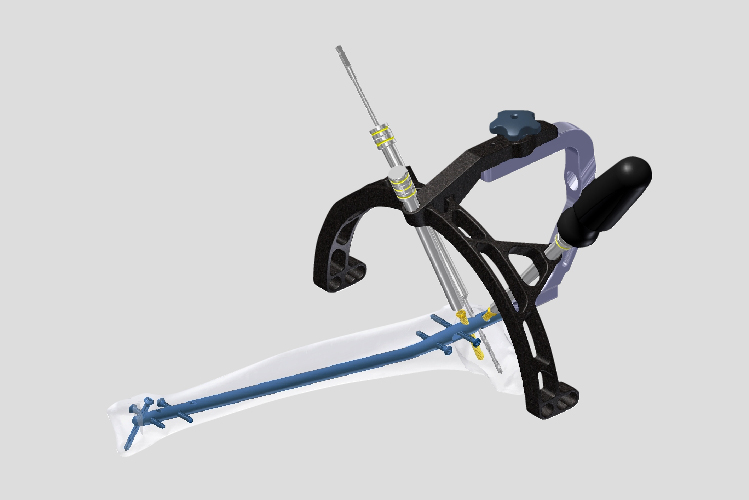
Makalu™ Expert Femur Antegrade Nail System
Designed for complex femoral shaft, subtrochanteric, and combination fractures. Featuring an optimized 1.5m radius of curvature to fit natural femoral bow and prevent distal anterior perforation.
| Material Grade | Titanium Alloy Ti6Al4V ELI / 316L SS |
| Nail Diameters | 9.0mm to 14.0mm (1.0mm increments) |
| Nail Lengths | 300mm to 460mm (20mm increments) |
| Proximal Locking | Reconstruction & Standard Modes |
| Distal Locking | Multi-planar (1 Dynamic, 2 Static) |
Bison™ Trochanteric Reconstruction Nail System
Specifically engineered with a 5° proximal valgus angle for trochanteric entry. Integrates dual integrated lag screw options for stabilization of ipsilateral femoral neck fractures.
| Material Grade | Titanium Alloy (ASTM F136) |
| Entry Point | Greater Trochanter Apex |
| Proximal Angle | 125° / 130° / 135° CCD Options |
| Distal Targeting | Radiolucent Carbon-Fiber Arm |
| Sterilization | Sterile / Non-Sterile Trays |
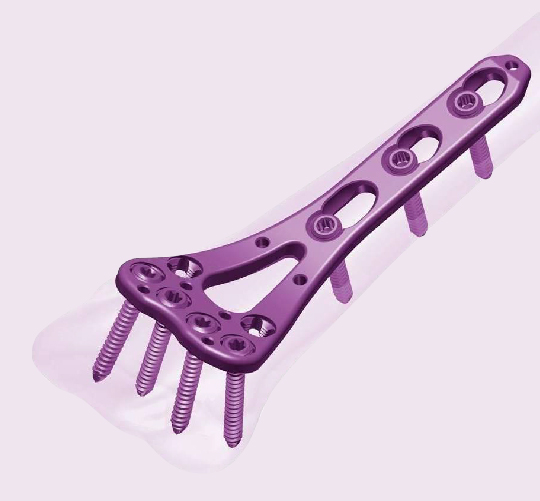
Complementary Trauma & Cable Plating Platforms
For periprosthetic fractures or severely comminuted fractures demanding hybrid fixation, our periprosthetic cable-plate systems integrate seamlessly with intramedullary constructs.
| System Type | Periprosthetic Cable Plate & LCP |
| Compatibility | All Antegrade Intramedullary Nails |
| Cable Diameter | 1.8mm Titanium / Cobalt-Chrome |
| Regulatory Status | CE Mark, ISO 13485:2016 |
| Supply Scope | Full Implant & Instrument Kits |
Engineering Comparison: Antegrade Femoral Nail Specifications
| Design Parameter | Standard Antegrade Femoral Nail | Reconstruction / Expert Trochanteric Nail | Retrograde Femoral Nail (Reference) |
|---|---|---|---|
| Primary Entry Point | Piriformis Fossa or Trochanter Tip | Apex of Greater Trochanter (5° Valgus) | Intercondylar Notch (Distal Femur) |
| Target Indications | Diaphyseal Shaft & Subtrochanteric | Ipsilateral Neck/Shaft & Subtrochanteric | Distal 1/3 Shaft & Supracondylar |
| Proximal Fixation | Transverse / Oblique Standard Screws | Dual Lag Screws or Helical Blade | Transverse Distal-to-Proximal Screws |
| Distal Locking Modes | Static (2) + Dynamic Slot (1) | Multi-Planar Angular Stable Locking | Spiral / Multi-Angle Distal Screws |
| Anatomic Bow (ROC) | 1.5m – 2.0m Radius of Curvature | Anatomic 1.5m Pre-bent Curvature | Minimal Bow (Straight / 2.0m ROC) |
3. Technological Evolution & Innovation Trends in Femoral Nailing
The field of intramedullary osteosynthesis is undergoing continuous technological refinement driven by advancements in biomechanical engineering, material science, and intraoperative navigation technology. For global orthopedic buyers looking 3 to 5 years ahead, understanding these trends is vital for maintaining competitive tender profiles and high clinical performance.
A. Radiolucent Targeting & Electromagnetic Distal Guidance
Historically, distal locking screw insertion required significant fluoroscopic exposure and free-hand "perfect circle" techniques, introducing radiation exposure to surgical staff and prolonging operative duration. Next-generation Antegrade Femur Nail Systems rely on advanced carbon-fiber, radiolucent aiming handles for proximal locking, paired with radiation-free electromagnetic (EM) distal guidance systems. This evolution reduces fluoroscopy time by over 60% while eliminating free-hand targeting errors.
B. Advanced Material Coatings & Surface Modification
While Titanium Alloy (Ti6Al4V ELI) remains the material of choice due to its lower modulus of elasticity (which reduces stress shielding compared to stainless steel), surface treatment technologies are advancing rapidly:
- Anodization (Type II Anodization): Enhances fatigue strength of thin-walled cannulated nails and prevents cold welding between locking screws and nail apertures.
- Antibacterial Plasma Coatings: Silver nanoparticle or Atomic Layer Deposition (ALD) antibiotic releases are entering clinical evaluation to prevent Implant-Associated Infections (IAI) in open high-energy trauma cases.
- Micro-Motion Dynamic Compression Slots: Controlled dynamic axial movement allows patient weight-bearing forces to compress fracture gaps, accelerating cortical bone bridging without compromising rotational stability.
C. Anatomical Curvature Optimization
Early intramedullary nails featured a straight longitudinal geometry or a large radius of curvature (ROC > 2.0 meters). Clinical registry data highlighted that straight nails frequently impinged upon or perforated the anterior cortex of short or highly curved femora, particularly in female and Asian patient cohorts. Modern antegrade nail designs incorporate an anatomically optimized 1.5-meter radius of curvature, reducing anterior cortex contact pressures by up to 45%.
4. Global B2B Procurement Trends & Sourcing Dynamics (2026–2030)
Healthcare purchasing organizations (HPOs), hospital supply chains, and private orthopedic distributors are reshaping their procurement criteria. The traditional reliance on single-origin multi-national brand names has given way to value-driven, multi-hub OEM partnerships capable of guaranteeing regulatory compliance, cost transparency, and supply resilience.
1. EU MDR & Global Certification Rigor
Strict enforcement of EU MDR (2017/745), alongside ANVISA and COFEPRIS authorizations, requires manufacturers to maintain exhaustive clinical evaluation reports (CER) and post-market clinical follow-up (PMCF) data.
2. Multi-Hub Manufacturing & Logistics
Supply chain disruptions have highlighted the vulnerability of single-factory vendors. Leading B2B buyers now mandate dual-location manufacturing (e.g., dual sites across Asia & Europe) to ensure continuous order fulfillment.
3. Total Cost of Ownership (TCO)
Procurement teams assess implants not merely on unit cost, but on instrument tray durability, replacement component costs, re-sterilization life cycles, and direct factory technical support.
4. Modular Surgical Trays & OEM Flexibility
Distributors demand streamlined, color-coded surgical instrument sets with universal quick-coupling drivers, reducing hospital sterile processing turnover times and lower overall freight weight.
Madison Ortho addresses these market shifts directly by providing direct-from-manufacturer supply agreements, standardized tender compliance documentation, and flexible private-label/OEM configurations tailored for regional market authorizations.
Streamline Your Orthopedic Implant Sourcing Today
Request our complete product specifications, international regulatory certificate dossiers, and competitive wholesale price structures for the Madison Ortho Antegrade Femur Nail portfolio.
5. Frequently Asked Questions (FAQ) for Orthopedic Buyers & Surgeons
Below are authoritative answers to key clinical, engineering, and commercial questions frequently raised by global healthcare buyers and surgical procurement teams.
Q1: What are the primary biomechanical advantages of antegrade entry over retrograde entry for femoral shaft fractures?
Antegrade femoral nailing preserves the distal knee intra-articular cavity, preventing surgical arthrotomy, intra-articular blood contamination, and potential septic arthritis risks associated with retrograde approaches. Antegrade nails provide robust axial stability for proximal-third, mid-shaft, and subtrochanteric fractures by placing the proximal anchoring point securely in the thick cortical bone of the greater trochanter or piriformis region.
Q2: How does Madison Ortho ensure rotational stability in unstable subtrochanteric fracture patterns?
Our Antegrade Femur Nail platforms integrate multi-planar proximal dynamic dynamic/static locking configurations and specialized reconstruction locking modes. In reconstruction mode, dual threaded lag screws are directed up into the femoral head and neck at defined CCD angles (e.g., 125°, 130°, 135°), neutralizing powerful rotational torque exerted by the iliopsoas and gluteus musculature in subtrochanteric fractures.
Q3: What international quality standards and regulatory certificates accompany Madison Ortho shipments?
All Madison Ortho Antegrade Femur Nail Systems are manufactured under certified ISO 13485:2016 and ISO 9001:2015 Quality Management Systems. Implants bear full CE Mark certification and hold regional sanitary registrations including ANVISA (Brazil), COFEPRIS (Mexico), and SGS auditing validations, ensuring seamless customs clearance and public health authority compliance.
Q4: What raw materials are utilized, and how is biocompatibility ensured?
Our nails are fabricated from high-purity medical-grade Titanium Alloy (Ti6Al4V ELI conforming to ASTM F136 / ISO 5832-3) and Implant-Grade Stainless Steel (316L conforming to ASTM F138 / ISO 5832-1). Raw materials undergo 100% ultrasonic defect testing and chemical heat-lot certification before precision 5-axis CNC machining, ensuring exceptional fatigue resistance and biological inertness.
Q5: Can B2B distributors request customized OEM packaging, sterile delivery, or tailored instrument trays?
Yes. Madison Ortho specializes in comprehensive OEM/ODM solutions. We offer sterile double-blister Tyvek packaging or non-sterile bulk delivery formats, custom laser-etched branding, localized multi-lingual labeling, and custom-configured anodized surgical instrument trays tailored to your local surgical preferences.
Q6: What is the typical lead time and minimum order quantity (MOQ) for international B2B orders?
Standard product SKUs are maintained across our strategic distribution warehouses, allowing rapid dispatch within 7 to 14 business days. For bulk OEM contract orders or custom tender requests, typical production lead times range from 30 to 45 days. We maintain flexible MOQ structures designed to support both localized market trials and large-scale national health ministry tenders.
6. Why Partner with Madison Ortho: Core Enterprise Strengths
As an established global manufacturer in the medical device sector, Madison Ortho combines innovative biomechanical engineering with an unyielding commitment to patient safety and surgical efficacy. Our brand reputation is built upon four foundational pillars:
Global Manufacturing & Reach
Operating advanced manufacturing facilities across Asia and Europe, Madison Ortho supplies precision orthopedic implants and surgical instruments to healthcare professionals in over 40 countries across 5 continents.
Cutting-Edge Precision & R&D
We continuously reinvest in state-of-the-art CNC machining centers, automated coordinate measuring machines (CMM), and biomechanical testing labs to advance intramedullary nail and plate technologies.
Direct Manufacturer Value
By eliminating unnecessary intermediary layers, we provide factory-direct pricing without compromising on vendor qualification, material traceability, or international quality accreditations.
Clinical Support & Training
Our expert technical service teams provide comprehensive surgical technique guides, CAD instrument layouts, surgeon workshops, and dedicated supply chain account managers worldwide.